Saturday, June 10, 2023

What God put me here to do

 What God put me here to do

By Bobby Neal Winters

Teaching is one of the strangest, most wonderful professions ever. Our job is to take something that we have and give it to others.  When we are done, not only will we still have what we gave away, but if we’ve done it well, we might just have more of it.

I’ve always liked to learn things.  I’ve always liked to share things with others.  This could mean I am a gossip; it could mean I am a journalist; it could mean I am a teacher. As I journeyed through that sentence, I came to the self-realization that I am--to a certain degree--all three of these things, but mostly, I think, a teacher.

It is in my opinion what God has put me on this world to do.

Since 2006, however, I’ve had additional duties. I’ve been working in university administration.  Originally, it was mainly helping students, but increasingly over the last few years, that has changed.

In 2017, I was given the responsibility of chairing a small department; in 2018 I was given an additional department, a bigger one; in 2020, the first small department was swapped for a larger one.

Every step I took along the way meant less teaching.  Less contact with students.  Ultimately most of the students I got to see were ones who were complaining about something.

There is a line in the parable of the prodigal son.  Jesus says of the prodigal son, “He came to himself.”

Late in the fall semester of 2022, I came to myself. I began to think, “This is not what God put me here to do.”

It was unconscious at first.  I was talking to one of my best teachers when I told her, “If anyone ever offers you the job of department chair, remember that God put you on this Earth to teach.”

I realized I was talking to myself.

There are chairs who teach, teach a lot, and teach well.  Don’t get me wrong.  

When I came to myself, I realized that, other than the moments I stole from the administrative work, I wasn’t really enjoying anything I did.

The fact that I turned 60 in October was also in the picture.  While as a mathematician I realize that the zero at the end is just an artifact of the base-ten system we use, you look at the center of the circle, and it is like staring into the abyss.

Are you using your talents? Are you building on a foundation? How much time do you have left?

So I made a decision to go back to teaching.

I’ve been around long enough to know that if I dropped dead right now they would replace me at work in a week, week-and-a-half tops, and maybe with someone who’d do it all better.  But they’d rather not have to, and I’ve enough consideration for my bosses that I don’t want to leave that abruptly, so I’m staying in administration one more year.

When that decision was made and when that decision was shared, my heart began to soar.  Doors that had been closed began to open; paths were revealed to me.  I didn’t actually have a dove descend from heaven to say anything, but I’ve gotten all the confirmation I need to know that I’ve made the correct decision.

So I have a year left on my sentence.

Actually, I just say that to make people laugh.  I’ve come to realize that my time in administration has been very educational. I know how the system works better now than I did 17 years ago.  As my position has shifted through those years, I’ve learned several new perspectives.  

I now know how to operate as a teacher more effectively.  I can help my students to find their way through the system more effectively, and I will be doing it while building on the foundation of my own discipline which I do love.

And to those who will listen I will share what I’ve learned on my journey to the degree that I am able.

In the meantime, you can find me in my office, marking days off of a calendar, looking forward to going back to what God put me here to do.

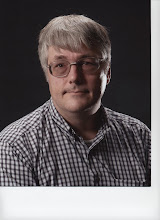
Bobby Winters, a native of Harden City, Oklahoma, blogs at redneckmath.blogspot.com and okieinexile.blogspot.com. He invites you to “like” the National Association of Lawn Mowers on Facebook. Search for him by name on YouTube.


Thursday, June 01, 2023

By Choice

 By Choice

By Bobby Neal Winters

I told my Paraguayan Elementary Statistics Class.  My Russian snake vodka story.  While it has nothing to do with statistics, every once in a while it is good to let the young people know you weren’t always the old boring thing that you are now.  

Anyway, if you catch me sometime, I’ll be glad to tell you, but for my current purposes we only need the end: I am on my Rotary Group Study exchange to Russia in June of 2000 in the dacha of my host’s father.  His father was retired military and had a nice summer country house, aka dacha.

Earlier in the day, I’d had a toenail ripped from my foot, and I was sitting in the dacha’s living room.  The father had made sure I was taken care of.  My foot was propped up; I had a beer in one hand and a glass of vine in the other; and the father was showing me his rifle.  I’d praised the rifle, perhaps too effusively, perhaps too politely, because then the father got a gleam in his eye.  

He spoke to me through a translator:

“I have some medicine that I brought back from China,” he said. “It will cure your foot.”  Then because I’d told him I had three daughters. “After you take this, your wife will give you sons.”

He then brought out a large jar of vodka.  Vodka with the body of a snake suspended in it.  The vodka had leached enough pigment from the snake’s dark green body to render the vodka in the bottle a clear yellowish green color.

I took a look at it and prayed, “Jesus, if you get me out of this, I will never miss church again.”

At that point the father’s wife came in to call us to dinner.  I said, “Thank you Jesus, thank you Jesus.”

Then the mother spooned out the vodka into a shot glass. The father took the glass and put it in front of me.  

At this point in telling the story to my class, I stopped, looked at the young men in class, and asked, “What would you do?”

The answer came back almost immediately: “You’ve got to drink it.”

And I said, “I opened my esophagus as wide as I possibly could and threw the vodka down my throat.”

I woke up in the middle of the night and began to ponder the young man’s answer: You’ve got to drink it.

While everyone in the class understood, the sixty-year-old that I am now as opposed to the thirty-something of 23 years ago or the twenty-year-old from my class says: No, I chose to drink it. 

I’ve been meditating on the use of food in the Bible, in Genesis in particular. The serpent said, “Go ahead and the fruit; you aren’t going to die.” Eve did, then took some to her husband.  He chose to eat it.

Esau came in hungry from a hunt.  Jacob was making some stew.  Esau said, “Give me some of that stew. I am so hungry that I am about to die.” Jacob said, “Only if you give...your birthright...this day...to me.”

Esau wasn’t going to die; he was hungry.  He chose to sell his birthright.

During the famine in Egypt, the people first gave all their goods, then all their animals, and finally themselves to Pharaoh in exchange for food.  The Children of Israel sold their descendants into slavery for hundreds of years for food.

On the flip side of this, Satan tempted Jesus and Jesus chose not to eat.  He chose not to turn the stones into bread and ultimately the Cross.

The point is to say, I chose to drink the snake vodka.  I didn’t have to.  Ultimately, we have very few things we can choose: I can’t choose to live forever; I can’t choose to jump over the moon; I can’t choose to lift the Empire State Building.

I can choose what goes into my stomach.  That day 23 years ago, I chose to drink the snake vodka. The reasons? To make my host’s father happy for one thing, but I think on a deeper level it was to make a better story.

This was before I began to write, but even then I was a storyteller, and the stories I brought back from Russia were the first ones I had appear in the paper.  It was then that I got printer’s ink in my veins.

It has been an addiction, but I choose to do it.  It has made my life a better story, don’t you think?

Bobby Winters, a native of Harden City, Oklahoma, blogs at redneckmath.blogspot.com and okieinexile.blogspot.com. He invites you to “like” the National Association of Lawn Mowers on Facebook. Search for him by name on YouTube.


Tuesday, May 30, 2023

Of Time Machines and Airplanes

 Of Time Machines and Airplanes

By Bobby Neal Winters

I am in Paraguay teaching Elementary Statistics.

Hop into a time machine and go back almost 40 years. It would be 1984 or 1985.  My father was still alive. He only had a couple of years left, but we didn’t know that.

A group of my friends from graduate school went to an Oklahoma Academy of Science meeting that was being held at East Central University that year.  It was only a little further from there to my family’s home, so I took my friends to meet them.

We were modest working people.  Our house was small, but we owned it. My friends met my family, and my father was very impressed as to how nice they were, how well brought up, how well-presented. 

They were nice, they had been well brought up, but I knew then and I know better now that they weren’t perfect. Not that anything in particular was wrong with them, but they just weren’t perfect. No one is.

What I know now is that this was a meeting of classes, a place and time where boundaries came together.  My family was working class.  The people I was going to grad school with were middle class.  These are not the same.  Someone who knows something about sociology--which I do not--would know how to classify all the differences with great nuance.

For my part, I will stick to what I’ve seen as one who’s made the journey from working class to middle class.  All I know is what I’ve seen with my own eyes, interpreted through my own lens.

Fast forward four decades.  And I mean fast.

Now hop on a plane and fly 5000 miles south to Asuncion, Paraguay.  I’ve got to wonder what Dad would’ve made of it through his lens.  He’d been to Europe, both England and the Continent, with a group of close friends of his (about a million of them) in the early 1940s.  He and those friends made quite an impression on the place.

He was also an avid reader of National Geographic and daydreamed about visiting the Pampas of Argentina, which is not far from Paraguay.  It would be nice to see the places I’ve been reflected back through his eyes with the benefit of his insight.

I guess I am seeing that to a certain degree when I am interacting with my students.  They are polite, respectful, friendly, and kind.  They are sharp in their studies.  They not only study, but they know how to study.  They have been taught.  

They have been in private schools where the instruction has been in English for at least half the day from Kindergarten on up.

Now, as said above, they are not perfect. No one is.  Indeed, they may have faults that working class kids never dreamed of having because money and privilege open all sorts of doors, not all of them good. 

But one thing I’ve seen, and this is important, is that they are able to interact with authority figures with an ease and comfort that I could never have dreamed of at that age.

As I said, I am in Paraguay teaching Elementary Statistics.  Most of my students will be coming to the United States eventually in order to finish their education. I would like them to come to Pittsburg State because I believe the rest of our students can benefit by being around them.  

While a great deal of this is the value of being around students from another culture in the sense of being from another country, a lot of it is the value of being around students who’ve this level of people skill, who’ve been raised so as to be confident and at ease around authority.

Looking back, I realize I benefited from that myself with my middle-class friends from graduate school.

There are all sorts of poverty. The sort of not having much money comes to mind.  But there is a poverty of experience with reality.  For those of us who came from a rural environment, that’s a big thing.  You don’t meet many different kinds of people; you don’t see many different kinds of things.

Yeah, yeah, yeah, there’s TV; there’s the internet. 

It ain’t the same thing.

There is something to being there. There is something to seeing it with your own eyes.

Were I to have my own way, I would drag every student in the university down to Paraguay to see it with their own eyes.  I can’t.  Many can’t afford it financially, which is understandable; many would have a poverty of the spirit, which is a shame, but which can be fixed with time. 

But to bring a bit of Paraguay to Kansas, to Pittsburg, Kansas is something we can do.  To let our Kansas students meet the Paraguayans; to let our Paraguayan students meet the Kansans, it is a good thing.

I think my father would like it.  I think my father would like them.

Bobby Winters, a native of Harden City, Oklahoma, blogs at redneckmath.blogspot.com and okieinexile.blogspot.com. He invites you to “like” the National Association of Lawn Mowers on Facebook. Search for him by name on YouTube.


Saturday, May 27, 2023

Seeking Black Pepper and Cottage Cheese

 Seeking Black Pepper and Cottage Cheese

By Bobby Neal Winters

My wife and I have been seeking black pepper, pimienta negra in Spanish.  It’s been a hard thing.  We’ve been able to find the pepper corn easily enough, but pre ground black pepper is rather elusive.  Fear not, we have found it, but it has been a challenge.

We’ve decided to cook for ourselves a lot here in Paraguay.  It is a matter of having control of how much we eat.  As I’ve mentioned from time to time, I’ve lost a lot of weight recently, and I have absolutely no desire to gain it back.

For this reason, we are cooking for ourselves in the place we are staying. Well, lunch and dinner at least; breakfast is provided.

Food is basic to who we are, and it is a pathway through which trouble can enter our lives.  This is recognized in the Bible: The Serpent tempted Eve with the fruit of Knowledge of good and evil; Esau sold his birthright for a mess of pottage; the children of Israel sold themselves into slavery for need of food.  

At the beginning of his ministry, Jesus is tempted by Satan to turn the stones into bread, but he does not. He shows that we can control our hunger. He later performs the miracle of turning a few baskets of bread and fish into enough to feed 5000, proving in a case where he was in control that he did have the ability to perform the miracle.

In spite of the lack of spice in Paraguayan cuisine, I do like it.  It has lots of meat, lots of protein, and they tend to eat in social situations.  One of my students says his family--and most families--has an asado (barbecue for lack of a better word) every weekend. It’s an event for the whole family.

Since my diet, I’ve been given a good book on nutrition by a friend of mine.  A good diet is not only about calories, it is about the type of food we put in our bodies.  It is an old cliche, we are what we eat.

In the Gospels, food is a frequent metaphor for something else: Spiritual Wisdom.  When Jesus answered Satan’s temptation, he said, “It is written: Man shall not live by bread alone, but by every word that comes out of the mouth of God.”

Just as the food we eat with our mouths makes our bodies, the spiritual food that we take in through our eyes and our ears makes our spirit and eventually our soul.  I do distinguish between the spirit and the soul: the spirit is part of who we are; the soul is who we are.

If you listen, read, and look at things that encourage lust and greed, you will become licentious and greedy.  If you listen, read, and look at things that encourage generosity and kindness, you will become generous and kind.

If you want to encourage certain parts of yourself, you should feed them regularly.  The right things in the right portions.

Often these things are all around you.  We can find all of the meat and bread, fruits and vegetables that we want here.  Other things are more difficult to find, black pepper would be an example.  It is not a necessity, but it does help baked potatoes to go down more easily.

There are sometimes things that can’t be found, however.  We’ve not been able to find cottage cheese here for neither love nor money.  It is not a concept that exists.  They don’t see a reason for it.  The Paraguayans who were educated in the US did not develop a taste for it there, so it is not imported.

I will have to live without it until I come home.

As I press my metaphor, I would say that black pepper would represent a spiritual food that we don’t have to have, is not easy to come by, but we can have by putting out great effort.  This would be like in depth Bible Study.  Cottage cheese would be knowledge that we are just going to have to wait until God tells us directly. 

In the meantime, my wife and I have another week to spend in Paraguay before we come home to decadent pleasures of cottage cheese and mountains of black pepper at every turn.

Nos vemos pronto.


Bobby Winters, a native of Harden City, Oklahoma, blogs at redneckmath.blogspot.com and okieinexile.blogspot.com. He invites you to “like'' the National Association of Lawn Mowers on Facebook. Search for him by name on YouTube.


Friday, May 19, 2023

Going by Landmarks

 Going by Landmarks

By Bobby Neal Winters

The street that I am staying on while I’m in Paraguay is Legion Civil Extranjero.  Google translate makes this out to be Foreign Civil Legion.  This makes no sense to me, so I am going to simply believe it means Foreign Legion for no other reason than it just seems romantic.  (This street runs parallel to one called Senador Huey Long, named for the US Senator, who is either famous or infamous depending upon your point of view.) 

So I am staying on Foreign Legion Street in Asuncion, Paraguay. I don’t know the address or even that it has one.  The only thing I’ve seen is Legion Civil Extranjero casi de Las Palmeras.  “Casi” is Spanish for “almost” and Las Palmeras refers to the street that runs east-west just south of us; and we are “almost” on the corner.  

In a city of a million people, this might seem kind of imprecise, but I’ve given those coordinates to a cabbie downtown, and he got us there without a blink: 

“Nos gustaría a ir Legión Civil Extranjero casi de Las Palmeras, por favor.”  

“Si.”

And we arrived without adventure for the price of less than $5.

Walking can be an adventure.  Street signs are rare compared to the US, and you don’t always want to be checking the map on your phone because it’s never a good idea in any city to let strangers know that you don’t know where you are.

You learn to navigate by landmarks.

One of my favorite landmarks is El Colegio Las Almenas, which I had been mis-translating as “The German School,” but that is not correct.  The German School would be Colegio Aleman.  This is School of the Battlements.  When you look at their website, it appears to be an all girls school.

Regardless, it is my favorite landmark because it is at the corner of Legion Civil Extranjero and Dr. Toribio Pacheno.  I cannot for the life of me remember the name of the second street, and it is important.  Take it going to the east, and you will very shortly find yourself at a “Biggie” store.  You could think of “Biggie” as an upscale Dollar General Store which has a greater selection of food, or you could just think of it as an old-fashioned neighborhood market for the modern age.

Come down here and make up your own mind.

In the other direction, there is a restaurant called “O Gaucho.”  This is in Portuguese.  It can be translated roughly as, “The Cowboy.”

For those of you who know what a churrascaria is, it is a churrascaria.  For those of you who don’t know, a churrascaria is a meat restaurant.  I could call it a barbecue restaurant, but then we get into deep philosophical territory.  Does barbecue require sauce?  What is the quintessence of barbecue?  

There are those who charcoal a steak and call it a barbecue.  There are those who say barbecue can’t be beef. There are those who say it must have sauce, but the sauce can’t be sweet. (This reminds me of the distinction between homoousios and homoiousios in the arguments surrounding the Arian Heresy.)

So we flee the English language for the sake of avoiding religious arguments.  A churrascaria is a place where they have a buffet of side dishes, many of which are quite substantial, but the main attraction is that well-muscled young men come around to your table with skewers of meat that have been cooked over wood fires.  The meat is in various levels of doneness from medium-well to “put me back in the cow and I will live again.” 

There will be the occasional platter of chicken hearts and finally a dessert cart. 

All for about $25 a head.

Yes, Colegio Las Almenas is one of my favorite landmarks.

When you travel by landmarks, you have to be more tuned into your environment.  Traveling with a GPS nav-system makes you lazy, it makes you soft, you ignore your environment and take orders from a Godless machine.  You might as well be ruled by Skynet because you’ve turned over your freewill to a machine already. 

When you give up GPS and even give up street names, you pay attention to where the construction is, which yards have dogs, what the businesses are, where the sidewalks are good, where the new paint is. You tune-in to your environment. You are more alive than you ever have been.

They do have GPS here.  It does work.  Getting around by learning the neighborhood is a personal choice I’ve made.  I don’t know when I will pass this way again, if ever, and I want to soak up every moment.

Greetings from Paraguay. Dios te acompañe hasta que regresemos.

Bobby Winters, a native of Harden City, Oklahoma, blogs at redneckmath.blogspot.com and okieinexile.blogspot.com. He invites you to “like'' the National Association of Lawn Mowers on Facebook. Search for him by name on YouTube. )


Thursday, May 11, 2023

Learn How to Swim

 Learn How to Swim

By Bobby Neal Winters

We are going through a time of change in higher education. Our enrollment is down.  This is true not only locally, but over the country.  There were 4 million fewer university students in the US in 2022 than there were in 2012.  That’s a 10 percent decline. At the same time, the baby boomers (like me) are getting older and in greater need of medical care.  This needs to come from doctors and nurses, who both need education.

And just so that my point is not missed, these people need to be smart.  They need to know how to do stuff.

At the same time, everybody needs to know how to work some kind of machine or other.  We need people who can fix those machines.  This greater need is happening at a time when the birth rate in the US is going down.

With this said, let it also be said that the US has never had enough people to do all the work it wants to do, but we found ways to deal with it.  More on this later.

Now, right here and right now, we have a release of artificial intelligence of a higher quality than has been available before.  While there has been the occasional clap of thunder and flash of lightning before, the release of  ChatGPT was the first big drop of rain, and since that time a few months ago, it’s been a toad-strangler as my old grand pappy would say.

As so happens at times of rapid change, there have been those who’ve looked at the heavy rain, proclaimed it a devastating flood, and have started seeking higher ground.  And to be fair, the potential for disaster, especially in individual cases, is huge.  Again, to quote from the First Book of Dylan: “You’d better start swimmin’ or you’ll sink like a stone, for the times they are a-changin’.”

Before I mentioned that we’d never had enough people to do the work we wanted to do, but we’d found ways to deal with it.  One of those ways was immigration: African slaves to pick the tobacco and cotton; Irish and Chinese to build the railroads; Mexicans to pick the fruit; the brain drain on Europe after WWII; physicians and scientists from Asia.  But even that was not enough at times, so we have done a lot of mechanization:  Cotton gins and reapers; tractors and combines.

In all of these cases of mechanization, we’ve still needed people to do the work, but their reach has been extended by machines.

The recent developments in artificial intelligence are tools that can help extend the reach of our intellectual workers. And this has already been going on for years, for decades, but the rate of change has been so slow we’ve not noticed much.  Some of us remember times before word processors, before spreadsheets, before PowerPoint(good times!), and these tools extended the reach of those of us who work more with our words than our hands.

But this has been like a heavy dew or a light mist.

What’s happened since the release of ChatGPT has been more of a flood.

But ChatGPT is a tool.  It will extend the reach of writers, computer programmers, and educators to begin with

I am interested in all of these.  As a writer, I was curious, so I fed it in a few of my columns (it likes my writing by the way; I asked it) and had it write something on a particular topic in the same style. What it wrote sounded like me.  Maybe not the best version of me; I hope. But like me.  I don’t know if I will ever do anything with that but there are possibilities there.

My interest in programming comes from my job at the university.  I’ve been involved in rebooting our Computer Science program. We rebooted it because there is such a pressing need for computer scientists.  While I was initially worried that the fact that ChatGPT can write programs would hurt our major, I believe the reverse is the case.  There will be an even greater need for programmers, but they will need to be properly prepared.

Even a tool like a hammer is just a chunk of iron if you don’t know what to do with it.

As for education, this might wind up being the largest application of artificial intelligence. (It is hard for me to refrain from putting a joke about curving tests in, so there.)  There are numerous resources online. I’ve personally used them to teach myself a number of things.  Having some sort of guide would’ve saved many false starts. I’ve recently read a story where people are using ChatGPT to guide them.  I’ve got to think there is a way that we teachers can take this and leverage it to help extend our reach in the classroom.  I might leave this as something for the younger ones to figure out, though.

In closing, I’m reminded of an old joke from the 1950s or 60s, I think.  They had just programmed a very sophisticated computer, much more advanced than ever before.  They gave careful thought to the first question they would ask it.

They keyed in the question: “Is there a God?”  The tape turned; the relays clicked; the printer printed; they read the printout.

“There is now,” it said.

We are not there.  This is a tool, and if you are in some professions, you either need to learn how to use it or learn how to swim.

Bobby Winters, a native of Harden City, Oklahoma, blogs at redneckmath.blogspot.com and okieinexile.blogspot.com. He invites you to “like'' the National Association of Lawn Mowers on Facebook. Search for him by name on YouTube. )


Saturday, May 06, 2023

The Rest of the Story

 The Rest of the Story

By Bobby Neal Winters

I’ve been doing two things lately that have intersected in a surprising way.  

I’ve been involved in an online Bible Study where we’ve been going through a book called “When the Church Was Young” by Marcellino D’Ambrosio. I’ve learned about various historical events in the life of the early church including the Donatist Schism.  To make a long story short, the church was persecuted: some of the members of the church folded under the persecution, but wanted to come back later; the Donatists didn’t like that they were forgiven, so they split. 

I’ve also been listening to some country music from the 1960s in my workshop while doing my woodworking.  While doing this, I’ve noted a certain characteristic of most of the songwriters from that era.  They are lost and they know it.  They want to find their way back.

Combine these two, and I’ve had the Parable of the Prodigal Son on my mind. 

As I’ve mentioned from time to time, I grew up as a Southern Baptist, where the emphasis is on saving the lost.  

Not a bad mission statement, but it provides a lens through which every bit of scripture is viewed and if you only use that one lens some details can be obscured.

In any case, for years my view of the Parable of the Prodigal Son had been from the point of view of the prodigal: If you go home people will be happy. Your Father (God) will kill the fatted calf and there will be rejoicing.  And that is true, but the problem is that all of the preachers I’d ever heard stopped at that point.

There’s more.

There’s the stay at home brother. He sees a party going on and wonders what the hell is happening.  Dad, why are you throwing a party for that whore-mongering son of...yours? I’ve been here; I’ve done the right thing; I’ve worked every day for you while...you know what he’s been up to, eh?

I’ve got some insight here. My lot has been more like the stay at home brother’s.  I’ve not had a lot of practice doing the prodigal thing.  The prodigals go out, do their prodigal thing, and come back and everyone is just so happy to see them. 

That old green-eyed monster arises within us: Jealousy; anger; resentment.  It makes you think of another story about brothers: Cain and Abel.

As so often happens in the Bible, this is a retelling of that story. It happens again and again and again. The younger is favored over the older.  Here the younger prodigal is seemingly favorer over his older stay-at-home brother.

As we recall, Cain killed Abel and tried to cover it up, but God knew.  After God rejected Cain’s offering, He told Cain to not be downcast but to just try to do better.

In the parable, the Father has a similar talk with the older brother: “My son you are always with me, and everything I have is yours. But we had to celebrate and be glad, because this brother of yours was dead and is alive again; he was lost and is found.”

The parable ends there.  We are not told whether the older brother ever comes around or not.  Does he embrace his brother?  Does he pretend to embrace his brother to stay in good stead with the father, but kick him out when the old man dies? Does he make continual references to his brother’s activities for the rest of his life?

Well, as this story has played out countless times over the ages, I think it is safe to say that all those things have happened.

This parable is rich. Jesus meant for it to be used in all stages of church life.  Those who are lost can find their way back. That’s right there; take it and put it in your pocket. God and all the angels in heaven rejoice, yeah, yeah, yeah.

But those people who never let their feet wander down the more...uh...interesting paths of life need a little help too.

It is less easy for them, less easy for us to see ourselves as needing help. We’ve never squandered our inheritance on prostitutes after all, and it sounds like it could be fun.

The prodigals know that whatever fun there is comes at a very high price: smoke-filled honky-tonks; lonesome Sunday morning sidewalks; D-I-V-O-R-C-E. 

We know how Jesus would want the story to end. The older brother embraces his younger brother with love; he listens to the reasons he came home; he realizes his secret envy of his brother was misplaced; he learns grace.

Let’s end there, with that hope.

Bobby Winters, a native of Harden City, Oklahoma, blogs at redneckmath.blogspot.com and okieinexile.blogspot.com. He invites you to “like'' the National Association of Lawn Mowers on Facebook. Search for him by name on YouTube. 

Saturday, April 29, 2023

Providing a Pattern

 Providing a Pattern

By Bobby Neal Winters

We are now in a time of year when students will begin graduating from school. I am now an old professor. I’ve come a long way personally from the backwoods of Oklahoma to my life here among the shimmering spires of southeast Kansas.  

Life’s been good to me so far.

The question arises: Have I learned anything?

I mean, not from a book, but from life.

What advice would I give to a younger self?  What would I tell my kids and grandkids if they actually listened to me?

I’ve made lists before. Longish lists.  Tongue firmly in cheek for the most part.  But more seriously, I have one thing I would like to suggest.

Take up a discipline.

I don’t mean a career.  I mean take up a practice that you do on a regular basis--every day, every week--and keep at it.

Take it seriously.  By this, I mean to keep at it.

It doesn’t have to be something that is hard.  In fact, if it is too hard you won’t keep it up.  It is better to start with something that is easy.

Like going to church.

You get up in the morning; you put on some nice clothes; you go and sit for an hour; you come home.

Easy.

Even if you don’t believe in God; even if you don’t listen to the music; even if you don’t listen to the scripture being read; even if you don’t pray; the discipline of this will organize your week.  It will mark your time.

And, while I am at it, another discipline you can practice is prayer.

Set a time every day and pray.  Again, you don’t even have to believe in God.  Think about the people in your life and think about the good things you would like to happen to them. 

It doesn’t cost a dime. No one has to know about it: it’s better if they don’t. In particular, pray for the people who annoy you. Every day, as a discipline.

Or you could exercise.  This might be the best entry point to the practice of a disciple for young people. Daily exercise.

You know me. I love walking.  Every day that weather permits. Mostly around my neighborhood, but lately I’ve been doing an orbit around the Kansas Technology Center. The weather has just been so nice.  At lunchtime, I throw a sandwich down my throat and then I walk to the KTC and back. No dogs and very little traffic to dodge.  If it’s convenient for you, you should try it.

I kind of tipped my hand when I said it was a good entry point for young people because here’s the thing: Once you’ve instituted one discipline, it is easier to institute another.

If you go to church every week, you can piggyback something else on that: calling your mother; calling a sick friend; mowing the lawn for an elderly neighbor.

If you pray every day, you can tack on reading a chapter from the Bible or the Koran or Ayn Rand (shudder).

Once you learn to institute a discipline, you can try out different things.  Learn a language? Learn woodworking (be careful!)?  Associate with groups of people who are interested in the same thing.

You can change yourself; you can connect with others.

It’s best to learn this when you are young so that you can benefit from it your whole life.

Here is the tragedy.  I am pretty sure no young person--or at least so few as to be statistically insignificant--ever started a disciple because they were told it would be a good idea.  Those who do do so because they see others doing it.

Those who are interested in sports in school have a leg up, as it were.  But because of structural constraints, there is a bottleneck there.

So this is to you old guys who read my column. If you want a young person who is near and dear to you to take up a discipline, take up one yourself.

Go to church; pray; exercise; read; make sawdust from one by threes.  And try not to be a bore about it. Provide a pattern for the young ones to see and have in their minds.

They might remember it and follow it when you are gone.

Bobby Winters, a native of Harden City, Oklahoma, blogs at redneckmath.blogspot.com and okieinexile.blogspot.com. He invites you to “like'' the National Association of Lawn Mowers on Facebook. Search for him by name on YouTube. )


Saturday, April 22, 2023

Math to the Nines

Math to the Nines

By Bobby Neal Winters

Teaching mathematics is treacherous. First off, people will walk up to you and tell you to your face that they hate mathematics.  

And they are proud.

There is constant pressure to change the way mathematics is taught in order to make it easier, but when you do, you will inevitably get pushback because you are teaching it in a way the parents weren’t taught, and they are made to feel stupid because they can’t help their children.

This is a shame because mathematics is useful, beautiful, and fun.

Let’s play a game.  If you have a pencil and paper handy, pick them up.  Let’s take two 2-digit numbers (any number of digits will work, but let’s start off simple) say 57 and 38.  

Look at the smaller of the two numbers (in this case 38).  Look at it digit by digit.  See what it takes to build up each of the digits to 9.  In this case, 6 + 3 = 9 and 1 + 8 = 9.  Take the 6 and the 1 and make a new number: 61. (61 is called the nines complement of 38 because 61 + 38 = 99.)

Now take the 57 and add it to the 61.  This is 118.  In this game, we want to remain within the world of 2-digit numbers, so that extra 1 out in the hundreds place has got to go.  To get rid of it, add it to the 8 on the other end.  This gives us 19.

Okay, what do we do with that 19?  Well, 19 + 38 is 57.  So it looks like by adding 61 to 57 and adding the extra 1 to the back, I’ve subtracted 38 from 57.  

Maybe I was just lucky.  Let’s try that again.  Let’s take 91 and 63.  Let’s turn the 63 into 36 because 3 + 6 = 9 and 6 + 3 =9. Now add 36 to 91.  This gives us 127, but adding the 1 at the front to the 7 at the back gives us 28.  Now 63 + 28 = 91.  So, yes, 91 - 63 = 28.

This is called the nines complement method of subtraction.  

Catch me with pen and paper sometime and buy me an oatmeal cookie, and I will show you why it works.  You might not understand my explanation, but at least I’ll get a cookie out of it.

There are many different kinds of people in this world. It takes all kinds of people to make the world work.  One kind will think this is kind of neat.  They will want to just play around with it and show people how to do it on napkins at cocktail parties.

Another kind will wonder what it’s good for. Some of these will get nasty and start saying things like this are what’s wrong with education in this country. Our math teachers are teaching all of these new-fangled ways to subtract when we should just teach the old fashioned way that I was taught...

I think I have that recorded on an old 45 vinyl record somewhere;  maybe on vellum; maybe pressed into clay with cuneiform.

As for the nines complement method of subtraction, it was used at least as far back as the 1600s.  Blaise Pascal, a French mathematician, invented a mechanical device to add, and it could use the nines complement method to subtract.  There were also mechanical devices in the 1800s and the early 1900s that did this.

So this isn’t new-fangled math.

And it doesn’t depend on working in base 10.  By changing what needs to be changed, it can work with any base.

This came in handy when they invented digital computers. In computers, numbers are encoded in base two. In a computer’s central processing unit, there is a cluster of transistors that is wired together in such a way that allows them to perform addition.  There are literally (and I know what that word means) thousands of transistors devoted just to adding two numbers.

To say the wiring is “complicated” is to stretch that word about as far as it can go.  I suppose they could’ve come up with some other way to wire up transistors to subtract, but somebody, undoubtedly said, “Hey, you know that the nines complement method of subtraction they use on mechanical calculators doesn’t depend on base 10. We can use it in base two as well.”  (Actually he said, “Base two too,” and giggled.)

So they used what is known as ones complement to do subtraction and knocked off work to have a beer or seven.

Anyway, I think this stuff is fun and beautiful and useful.

The End.

Bobby Winters, a native of Harden City, Oklahoma, blogs at redneckmath.blogspot.com and okieinexile.blogspot.com. He invites you to “like'' the National Association of Lawn Mowers on Facebook. Search for him by name on YouTube. )


Sunday, April 16, 2023

Straight, Square, and Strong

 Straight, Square, and Strong

By Bobby Neal Winters

I am the kind that likes to create a parable, and then when the reader least expects it, do a zig and get to my point.  Please bear with me.

I share some of my carpentry projects on my Facebook page.  I like the medium for sharing in the sense that if you don’t want to look at it, you can just scroll past it.  It’s like writing in that way: If you don’t like it, just skip it.  This appeals to me because I don’t like imposing myself on anyone.  I’ve been cornered too many times by bores; it is a burden we good listeners bear. 

Anyway, I’ve just finished a small chest of drawers.  It is one foot cubed in size.  I put the knobs on it yesterday.  It is the second such chest that I’ve built.  I’d documented the first on Facebook as well. The pictures looked nice. Everyone praised it, but then they would: my friends are nice.  

But I knew that it wasn’t as good in real life as it looked in the pictures.  Angles are tricky things.  You can photograph something that is crooked from the right perspective, and it will look straight.  That happened in this instance.  I had to tell people I was a better photographer than I was a carpenter, but that isn’t really true either.  Sometimes accidents help us.

Looking at what went wrong the first time, I set about to correct it. To make a long story short--and remember what I said about having been cornered by bores in my time--I figured out a better way to go about my cabinet making.

In building something--a cabinet for example--there is what you see and what you don’t see. There is the final look you want at the end on the outside, but there is the structure that actually holds everything together on the inside.

You want the outside to be pretty, to be visually appealing, to reflect well on you and your skill at the craft.  At the same time, you want the interior structure to be straight, square, and strong.  And you want it designed in such a way that you can assemble it without undue stress.  (This last is particularly important if you have taken up the craft for the specific purpose of stress release.)

Given the above, I decided to make my interior structure something that was mostly invisible.  Each drawer would sit on a frame that I would make using halflaps.  I would then join these frames to vertical supports with edgelaps. Then at the end, I would cover it with side panels.

Previously I had used the side panels as structural elements and everything had gone awry at the final gluing. 

So, I did all that.  I used one-by-threes from home depot for the inside.  I ripped them down the middle to make the vertical supports. The wood for the interior frame didn’t cost much more than 10 dollars. I used my saw and my chisel, and I glued it all up.  It was straight, square, and strong.  

But it wasn’t particularly pretty. Here we get into an interesting area that is one of continual struggle for me.  What I had just built would have functioned just fine to hold some drawers to put my tools in. (This is what we weekend carpenters do: We buy tools to make things to put our tools in. Don’t laugh. It works for us.) But it would’ve been ugly.  We have built-in expectations of what a chest of drawers should look like.

Because of this, I took what I’d built that was straight, square and strong, and I put side panels on it.  The side panels cost at least as much as the wood for the inside structure, but they were there for purely cosmetic purposes.

However--and if there is any lesson from this it’s coming now--they were much easier to put on after I got a good straight, square, and strong interior support.

This provides a point of departure to discuss a number of things.  I’ve had occasion over the last 16 years in my job in the Dean’s office, to talk to a lot of students who were in trouble.  What I learned there is that if you want to be successful in school, in work, in the world, begin by having strong stable support at home. Put differently: Be straight, square, and strong on the inside, and it’s easier to keep things in order on the outside.

This is in harmony with what I’ve learned as a teacher. If you want to do a good job teaching a class, you need to know what you are teaching.  You will know it better as you teach it, but you have to begin as a learner. To show someone how to be a lifelong learner--and if we don’t do that at the university, then what the hell are we there for--we must ourselves be lifelong learners.  We must be straight, square, and strong on the inside before we can model that for our students on the outside.

To do any of this, we don't rely on what others tell us. They only see what we let them see. We’ve got to look at ourselves honestly, using objective measures.

And if we don’t do it right the first time, we start over.  Maybe more than once.

Okay, I am going to let you go there. I see I’ve had you cornered for too long.

Bobby Winters, a native of Harden City, Oklahoma, blogs at redneckmath.blogspot.com and okieinexile.blogspot.com. He invites you to “like'' the National Association of Lawn Mowers on Facebook. Search for him by name on YouTube. 


Sunday, April 09, 2023

Making Memories in the Workshop

 Making Memories in the Workshop

By Bobby Neal Winters

My youngest grandson brought me an old piece of wood from a picket fence yesterday and asked me to make him a sword.  (He asked me to make him a Minecraft sword, and I am not sure what that is, but I didn’t let on.)

As it was from a picket fence, it already had a point on one end, so there was not much work to be done there.  It had, however, been in someone’s fence for a long time. (I didn’t ask its provenance; sometimes 5-year-olds are a little hazy on the rules, and grandpas don’t necessarily ask a lot of questions.) 

The wood was old. It was beginning to flake off in places. I said, “Yes, I will make you a sword.”

I went to my workshop.

Unbidden, they (he and his big brother) followed me.  They followed me at a distance.  I’d had time to get the sword into my wood vise, I turned and there they were, looking over my shoulder.

I’d clamped the wood in my vise because I was going to plane it.

Planes have been a mystery to me until recently.  My Grandpa Byrd had had planes.  He was a carpenter, so, yeah.  But I’d never really touched one, and I didn’t really know what they were good for.

What they are good for is planing wood. To set them (tune them is the phrase used) so that they take thin, thin shavings of wood from whatever board you are planing.  The wood is to come off in thin, translucent curls. The floor of one’s shop should be forever covered in such curls.

So there I was with the wood clamped in the vise and with my two grandsons peering over my shoulder.  I began to plane.

I’d just tuned my plane last week, so the wood was coming off in nice, translucent shavings.  First, they were dull because the wood had been so stained by rain, sun, and weather in general, but then slowly they became brighter. The curls became brighter and a subtle scent began to enter my nostrils: Cedar.  This was a cedar picket from someone’s picket fence.  (Where did that little scoundrel get it? I don’t have a fence with that type of picket in it.)

The wood itself became shiny, red, and beautifully textured.

I turned it from one side to the next as the grandsons looked on, occasionally taking breaks to play with curls of cedar and mess around in my sawdust. (The youngest, in particular, loves sawdust.  His grandmother and mother think it's annoying; to me it looks like opportunity.)

After a few minutes of planing, I extricated the sword from the vise, and handed it to my grandson with some warnings:

“Do not poke anybody with it, do not hit anything with it, and whatever you do, don’t poke it in a cat’s butthole.”

I’m hoping that the last one didn’t give him any ideas.

This took ten minutes.  I don’t know if the boys will remember it, but I sure will.  If they do remember it, it will be worth the thousands of dollars I’ve put into my workshop in tools and time

Heck, it was worth it anyway.


Bobby Winters, a native of Harden City, Oklahoma, blogs at redneckmath.blogspot.com and okieinexile.blogspot.com. He invites you to “like'' the National Association of Lawn Mowers on Facebook. Search for him by name on YouTube. )


Saturday, April 08, 2023

Pegs, planes, dados, and half laps

 Pegs, planes, dados, and half laps

By Bobby Neal Winters

Writing is like carpentry; carpentry is like writing; and writing about carpentry just seems right to me.  Please indulge me for a while as I do just that.

Planes are useful tools.  You can do a variety of things with them that I am only beginning to learn, but one of those things is very important: Erase your mistakes.

I’ve been working on a small chest of drawers recently.  By small I mean one foot by one foot by one foot.  I’ve done two such recently.  For the first, I put it together with wooden dowel pegs. This went incredibly well until the last step, the final glue up.

When I came to glue the sides on, the geometry of the small cabinet was such that I couldn’t get the dowel pegs to match the holes I’d drilled for them.  With effort, I got it all to come together, but it was slightly askew.

I was careful enough in my photography, that the folks on Facebook didn’t notice--or at least were kind enough not to say.  But I noticed.  

The cabinet is functional, but it’s off. And it bugs me.  It’s good enough to put my tools in, but I can do better.

I wake up early, long before I get up. I think about things.  I spent a lot of time thinking about how I could improve my cabinet.

And it came to me: The problem was with the dowel pegs.  They are quite useful things, but I was using them in the wrong way. Instead of using dowel pegs or screws or brads or nails (shudder) or pocket screws, I decided to go old school and used dados and half-laps.

For those of you who think I’ve just started speaking another language, I have: the language of old-school joinery.  A dado is a groove you cut in a board that goes across the grain.  A half-lap is a joint where you cut halfway through two boards and then join the two together.  

Doing my joinery this way helped me to get the gluing to line up correctly at the last step.

I came out, looked at my beautiful creation, and noticed a gap. I sucked in breath through my teeth.  

The problem wasn’t so much the gap, but that pieces of my framing had come out of line.  This happens in gluing.  You clamp it all together straight, you let the glue dry, but as the glue dries, it contracts and things move.

This is where a plane comes in. (Remember, a plane is a useful tool.)

I took a plane, and I started shaving down everything that was out of line.  This is an incredibly satisfying process.  The worktable and the floor became covered with shavings, but the frame became straight before my eyes.

It is beautiful, and awaits some polyurethane finish as I write this.

There were times when I tried to never repeat what I wrote about.  I didn’t want to bore the reader.  Well, that was misguided in a number of ways.  

The first of which was the arrogant assumption that the reader has so little to do that they remember what I write from one week to the next.  

The second was the arrogant assumption that I’d said all that could be said, in the best way it could be said, or that I was even right about the thing the first time.

Readers are busy people.  They are smart, so they remember a lot, but they don’t remember everything.  Fairly frequently, I am given a compliment on that wonderful column I wrote about X, when I actually didn’t write a column about X. When this happens, I thank the person for the compliment, and thank God for his grace. A person saying something nice to you feels good even if you don’t deserve it.

I began to allow myself to revisit topics.  Maybe I’d gotten it all wrong the first time.  Maybe I learned something new about the topic.  Maybe I’d learned better writing techniques and could approach the topic in a better way.

There are tools in writing just as there are tools in woodworking.  Rewriting an essay is like taking a plane to the frame of a cabinet.  After you’ve written something but before it goes to print, you need to go in and smooth things out.  This involves taking out the words that don’t belong there; adding in some connective supports.

When you send it off to publication, well, it’s done. There doesn’t seem to be an analog for a plane in writing that works after you’ve hit print.  You just have to revisit your topic and eat a little crow, sometimes. Make a new cabinet, as it were.  

But it feels so good when the second one is better.

Bobby Winters, a native of Harden City, Oklahoma, blogs at redneckmath.blogspot.com and okieinexile.blogspot.com. He invites you to “like'' the National Association of Lawn Mowers on Facebook. Search for him by name on YouTube. )


Saturday, April 01, 2023

Heard it in a Love Song

 Heard it in a Love Song

By Bobby Neal Winters


I like Southern Rock: Lynyrd Skynyrd, The Allman Brothers, and the Marshall Tucker Band. I’ve known them from my youth. I was listening to Marshall Tucker’s “Heard it in a Love Song” the other day, and it occurred to me that this is the same song as “Free Bird” and “Ramblin’ Man.” 

For those of you who are not familiar with “Heard it in a Love Song,” it is written from the point of view of a man who is singing to a woman he is in the process of leaving.  He’s explaining to her that it’s not her fault; it’s just the way he is; he’s leaving her; and that’s okay.

The inference she’s supposed to draw is that since he’s being upfront about all this, he’s still a good person.

Heard it in a love song

Heard it in a love song

Heard it in a love song

Can't be wrong


In Lynyrd Skynyrd’s “Free Bird,” the writer is more focused on his own character than the needs and feelings of the woman whom he is leaving. It’s all his fault, and he must leave because that is who he is:

But, if I stay here with you, girl

Things just couldn't be the same

'Cause, I'm as free as a bird now

And this bird you cannot change


The Allman Brothers’ “Ramblin’ Man” makes it clearer.  He was just born this way:

Lord, I was born a ramblin' man

Tryin' to make a livin' and doin' the best I can

And when it's time for leavin', I hope you'll understand

That I was born a ramblin' man

Lest I be remiss, these songs all hearken back to the classic by Looking Glass, 

The sailor said, "Brandy, you're a fine girl What a good wife you would be 

But my life, my love, and my lady is the sea"

There is a point of view that would say that the women who choose these men don’t really want a long-lasting relationship themselves.  They like the bad boys; they choose someone who is going to leave them eventually because they get bored too.  There might be some merit to that, but I will leave it to a woman or to a man braver than me to expand upon.

One could just choose to take the protagonist at face value: He’s just a roamer.  It’s the way he is.  While he has feelings for the woman he’s leaving, there is something he’s wrestling with within himself that is just forcing him to move on down the line.

Yeah.Right.

While a twentysomething might believe that, at sixty it’s difficult to get all that out with a straight face.

In the movie Guardians of the Galaxy, Vol. II, Starlord meets his father, the aptly named Ego.  Ego explains to his son, using the lyrics of “Brandy (you’re a fine girl)” that men like them were just different. They couldn’t be tied down. They were too important to be committed to just one woman.

Kurt Russell’s  interpretation of that character and use of the song as illustration, caused me to interpret that song in a new light.

The troubadour, far from being honest with his romantic partner, is being manipulative. (You have no idea how hard it was not to day “a manipulative bastard” there.  Oops, I slipped.) He’s trying to put his girlfriend on the wrong foot, trying to make himself look good, trying to make her think she’s just not sophisticated enough.

Men, this is really not a good look for us.  But let’s continue.

Age does bring knowledge.  

I’ve seen men who’ve used women in such ways over their lives grow old and die alone.

But I’ve also seen men who’ve roamed from woman to woman, discover that they can change, settle down, maybe raise a family.  They discover there is comfort in the sameness of a long-term relationship that more than counterbalances whatever joy is found in the novelty of a continual string of new relationships.

The Free Birds, the Ramblin’ Men, the Sailors, those who heard it in a love song are missing the boat.

Lynyrd Skynyrd got it write in “Simple Man”:

You'll find a woman, yeah, and you'll find love

And don't forget son there is someone up above

And be a simple kind of man

I heard it in a love song; can’t be wrong.

Bobby Winters, a native of Harden City, Oklahoma, blogs at redneckmath.blogspot.com and okieinexile.blogspot.com. He invites you to “like'' the National Association of Lawn Mowers on Facebook. Search for him by name on YouTube. )


Saturday, March 25, 2023

Of Chisels and Men

 Of Chisels and Men

By Bobby Neal Winters

They say that iron sharpens iron. If you get nothing else from this, stick that in your pocket and keep it.

I sharpened my chisels last night.  

This is not a sentence that I ever thought I’d write, not even in a work of fiction.  I could have imagined writing, “We planted gooseberries on Ganymede,” in a work of science fiction, but not the sentence about the chisels. 

This is nuts.

I’ve been tracing back my entry into woodworking to having found my father-in-law’s table saw.  That was an import point of transition on the route, but there were multiple other such points on the way.

Summer 2020, we were in the lockdown, working from home. No movies; no vacation; no restaurants. Stuck.At.Home.

I went into the back yard, and I saw my youngest daughter’s boyfriend working on his car.  I went into the front yard, and I saw my neighbor across the street working on his house.  

With their inspiration, I decided to become more active.  I began putting in a paver sidewalk in the backyard.

I looked at what I’d done; I saw that it was good; and I started doing more things out of the stinking house.

These are both young men: the first under 30 and the second under 40.  Young men, healthy men, working men.  Neither men of many words.  I looked at their actions, and they inspired me.

So here I am, sharpening chisels.

There is a right way to do this.  Or maybe I should say, a good way.  I would hate to rule out all other methods, because even among the pros there are a variety of ways.

This particular method involves taping different grades of sandpaper to glass, spraying the glass with Windex, and sharpening the chisels on the coarser sandpaper first and then working your way up to the finer.  After that, you polish your edge on a leather strop.

It doesn’t take as long as it might sound, and when you are done--if you do it correctly--you have a sharp chisel.

I fell in love with chisels by watching Paul Sellers on YouTube.  He is a master.  He makes it look so easy.  He comes off as a model teacher; he seems kind; he’s not dogmatic; he teaches by showing.

He doesn’t say, I am going to tell you the right way to do things. Rather, he does something well, and you want to do the same.

Doing that requires a sharp chisel.

As a part of our rite of passage into manhood, Dad gave my brother and me pocket knives.  Sharp pieces of steel.  We were told never to hammer on them.

A chisel is a sharp piece of steel that you can hammer on.  

I think I’ve just glimpsed a great truth of the universe so indulge me for a moment.  The steel is necessary for neither the knife nor the chisel. A sharp piece of flint would do in either case.  Sharp pieces of flint were lying around long before Man ever came along, but there were neither knives nor chisels then.  It was Man who created knives and chisels; it was his use of each of these that made them what they are.

Until a few months back, I’d only owned one chisel.  In light the the previous paragraph, I should say that I owned a piece of steel that was kind of sharp on one end and had a bakelite handle on the other. 

Only after having watched Paul Sellers at work and put in some practice myself did that piece of steel turn into a chisel. This is beginning to sound a little mystical even to me, but “You ain’t heard nothin’ yet.”

I got myself set up to sharpen my now multiple chisels first by setting out all of my sharpening paraphernalia: sandpaper, strop, Windex; the whole shebang.

Then I began to gather my chisels.  I had the one I had owned for years; I had three that my brother had given me; I had six that I had gotten from Amazon.

Then, from the corner of my eye, I saw three more.  They were in an ancient plastic bag.  They had obviously belonged to my father-in-law.  I removed them from the bag, and it was as if I’d never seen them before.  I looked at them, and I could tell these were good chisels.  While my father-in-law never wasted money, and there was quite a bit of er....crap...among the tools that he left, there were also some quite fine pieces.

These were quite fine.

I tested them on some wood I had there.  

They were already sharp.

What had been just pieces of steel that were sharp on one end and had plastic on the other, became chisels and appeared before my eyes.

They were a gift from Jim, my father-in-law, who passed away 16 years ago.

I did feel a bit of chill.

Bobby Winters, a native of Harden City, Oklahoma, blogs at redneckmath.blogspot.com and okieinexile.blogspot.com. He invites you to “like'' the National Association of Lawn Mowers on Facebook. Search for him by name on YouTube.


Saturday, March 18, 2023

Shaving in Full Circle

 Shaving in Full Circle

By Bobby Neal Winters

A few years ago I started shaving with oil instead of shaving cream. I liked the simplicity: You didn’t have to wipe it off afterwards. I liked the smell: cloves.

Word started coming back to me from some of my readers that you could shave with other things too, like hair conditioner, for example.  Just save those tiny little bottles every time you go to a motel and use them for shaving.  Or just steal some of your wife’s hair conditioner; you won’t use enough that she will ever miss it.

So I shaved my way through a variety of odd substances. It was a good time in which I didn’t spend any money on shaving cream.

It is now that I pause and note that this is just a little bit crazy. Shaving cream is not the big expense associated with shaving. The big expense comes with the disposable razors with the brand I used to use costing $2.40 apiece. To make the math come out even, say you get 6 shaves out of one. That’s $0.40 per shave.  Even if you are stealing hair conditioner to shave with, that’s expensive.

I’d gotten tired of that.  I decided that I wanted to “put it to the Man,” so I made a change.

Joe Scott, who runs the YouTube Channel, “Answers with Joe,” started advertising a “new” way to shave.  Actually, it’s a retro way to shave. It’s using something which used to be called (and now seems ironic) a “safety razor.”

There is a company which sells a slightly updated version of the safety razor which uses the old-fashioned single blades.

Men of my age will remember these.  They were what our fathers and grandfathers used.  

These men of my age will also remember the arms race involved when first they went to the two blades (there was a commercial with an animation showing the old-fashioned blade bend in-two), then to three, then to four, and, I believe, now to five. There was justification for every step. The first blade pulls it out; second cuts it off.  Then the reasoning became a bit less intuitive.  I suppose they took for granted that “more is better” would carry the day, and it did.

And, of course, the more blades, the more you pay.

Anyway, Joe Scott on YouTube was recommending this old-school solution and it appealed to me.

The company selling the old-school solution has a different business model.  It makes its money off the razor itself which costs $60 up front in a one-time expense.  Their razor differs from Dad’s razor in that it is designed to hold your blade at an angle to make it cut better.

In contrast to disposable razors, the blades cost $6 per hundred instead of $2.40 apiece.  I currently (remember that word) am getting about 5 shaves per blade, but let’s be conservative while making the math easier at the same time and say I get three shaves out of a blade. That would be about $0.02 per shave if nothing else changed. If.

I said I am currently getting 5 shaves per blade.  When I started using them, I was getting one or two.  That is still only three to six cents per shave, but something else was happening.  

You see there was another reason for the paradigm shift to the double, triple, quadruple, and (dear Lord) quintuple blades.  They don’t cut you as bad as the ironically named “safety razor.” 

In the beginning, shaving with hair conditioner, I was cutting the fool out of my face.  I was walking around with my face looking like a rare cut of steak some days.

Some men would’ve switched back to the multiple-bladed crimes against nature, but not me.  I’d suck $60 into my old-school solution, so nevertheless, I persisted.

Seeing my quandary, and knowing that she is married to an idiot, my dear wife suggested I start using shaving cream.

So I did.

The difference that made was almost immediate.

My shaves were much less bloody, and my blades started lasting longer.

My wife does the shopping so I don’t know what she paid for the generic can she bought me, but you can bet that it was less than the $1.80 per can that Barbasol gets. I believe that it’s safe to assume that one can will last for a month’s worth of shaves, so that is 6 cents per shave. 

With the 2 cents per shave I am spending on blades, that is a total of 8 cents per shave.  This means that I am saving $0.32 per shave.  I still have to account for the $60 I spend up front on the “specially designed” safety razor, but that will be paid for by the savings in 188 shaves.

Yes, growing a beard would’ve paid for it faster.  But being clean-shaven is the tradition of my people, so there.  

To summarize, through years of expense, experimentation, and blood, I am now shaving the way my grandfather did 100 years ago.

It’s progress, I guess.

Bobby Winters, a native of Harden City, Oklahoma, blogs at redneckmath.blogspot.com and okieinexile.blogspot.com. He invites you to “like'' the National Association of Lawn Mowers on Facebook. Search for him by name on YouTube. )


Saturday, March 11, 2023

The Case for Standard Time

The Case for Standard Time

By Bobby Neal Winters

By the time this reaches the newspaper, we will have endured yet another brutal time change. I hate the time change.  I hate change, but let’s not digress. Many would agree with me on hating the time change and say that we should stay with daylight savings time year round. 

That is where we would part ways.

I’ve no illusion that what I write here will change anyone’s mind, but occasionally, in my role as a scholar, I must choose to die on a hill that no one cares about.  

This is that hill.

We switch between two time frames: Standard Time and Daylight Savings Time.  By the choice of nomenclature, clearly they want us to believe that Daylight Savings Time saves daylight.  It does not.  There is exactly the same amount of daylight regardless.

In contrast to this, Standard Time is standard.  I will now explain why that is. There was a time before clocks. When you got up when the light woke you, and you went to sleep after the dark had made you sleepy.  It was back in the days we were all red in tooth and claw, aka Hobb’s State of Nature.

In getting through the day, people would mark the path of the sun.  How high was it in the sky?  Was it at its high point, half way through the day yet?  If not, that was morning; if it had passed that it was afternoon; but the important part that helped divide it all up was noon.  

Noon was the basic standard.

At some point astronomers (or maybe astrologers, let’s not split that hair) split the day up into finer pieces.  We call them hours. Because the sun travels a semicircle (more or less) across the sky, they begin to think of the whole day/night cycle as a circle.  Because the math was easy, they cut each half of the cycle into twelve pieces.  These pieces are what come down to us as hours.

Before we got clocks, people dealt with time in a much looser way. I’ll get there at noon would mean some time in the middle of the day.

Then we got clocks, and the world got more rigid.  A town big enough to have a clock tower set its time so that it was 12 Noon when the sun was near its zenith.  If you had a watch, you would synchronize your watch with that clock.  Given that, when someone said to meet them at place x at time t, you could do that.  

This worked when the speed of travel and communication was slow. Then the railroad and the telegraph came in and ruined all that.

A system was created that allowed people to communicate around the world. This system went through a number of tweaks through the years.  The system we have now is called Coordinated Universal Time.  We abbreviate this as UTC.  

Shouldn’t that be CUT?

Okay.

The French name of the system is Temps Universel Coordonné and they were involved in the negotiation. I assume they wanted TUC to be the abbreviation. So nobody gets their own way.  

Humans, they make me laugh.

We measure our time in coordinated universal time.  We set up time zones around the world so that the sun is near its zenith at 12 Noon in each of those zones. 

The system is set up so that the base zone called UTC+0 is centered around the prime meridian which runs through the Royal Observatory at Greenwich, England. (Why that is the case is a whole different story.) Both England and France are in UTC+0, by the way, so they didn’t have to compromise on that.

We here, in God’s country, are on UTC-6.  We are 6 hours behind the folks in London and Paris.  In Seoul, South Korea (and Tokyo, Japan) they are at UTC+9.  So they are 10 hours ahead of us.

It’s all there right in the system.  

When we switch to Daylight Savings Time, we add an hour to our offset.  We will be UTC-5.  But most of the folks in the northern hemisphere do too, so the time differences will remain the same.

It becomes trickier when dealing with time differences between hemispheres because when one springs forward, the other falls back, but they don’t all do it at the same time.  

Brazil sticks to Standard Time all year round.  I imagine this is because the time change makes even less sense for them because they are in general nearer to the equator than we are, and it makes even less sense for them than for us.

So there is the case: Having Noon at the middle of the day.  If we are going to stay with one time--as we should--that should be Standard Time.

Bobby Winters, a native of Harden City, Oklahoma, blogs at redneckmath.blogspot.com and okieinexile.blogspot.com. He invites you to “like'' the National Association of Lawn Mowers on Facebook. Search for him by name on YouTube. )


Saturday, March 04, 2023

Behind the Mask

 Behind the Mask

By Bobby Neal Winters

Everybody is broken.

Everybody.

That is what I’ve learned.

We build a persona. A persona is a mask that we put on to deal with others. I said that we build a persona, and we do, but we often don’t realize it at the time.  A lot of people, maybe most, are not aware that’s what they are doing. They are not aware how important it is.  And their parents aren’t either.

Oh, our mothers are worried about what people will think.  They will make us comb our hair and brush our teeth.  They will tell us to wear clean underwear so that if we are in an accident we won’t shock the nurses. (The nurses with whom I am acquainted don’t shock that easily.)  But most moms are not consciously working to help their children create personas.

Regardless of that, some people are quite good at it, and those are the people who are running the world.  I looked at the previous sentence and thought about it a while.  It doesn’t quite get it: There are people who have carefully crafted personas who’ve been kicked to the curb as far as running the world is concerned; there may be a few folks turning the tiller of the world who are just naturals; but by at large the folks at the top are very careful about what they let people see.

Given that, let’s look back at the first part of this column: Everybody is broken.

This includes the people in power.  In my darker moments, I think maybe especially the people in power.  I should probably stop listening to the news.

Our brokenness can be an asset.

Pain is a path that goes to everyone’s house.

We can always connect through pain.

Everyone has lost a parent, has lost a sibling, has lost a pet.  Everyone has been fired, has failed a test, has lost a love.  We may speak different languages, but everyone can cry.

Many people craft personas that cover all that up.  They constantly radiate joy.  And God bless them for it, because they can spread joy.

For a moment.

I’m a fan of the movie “Inside Out.”  The girl in the movie has all these (joy, sadness, anger, disgust) emotions running around in her head, but joy dominates.  Joy will not let sadness hold the stage.

But there are times when sadness is appropriate.  There are times when sadness must hold the stage.

There are at least two points in the Bible where men who had very carefully created personas, let sadness take the stage.  When Joseph was testing his brothers, he let the mask slip and called out, “Is my father still alive?”  When David’s son Absalom had been trying to overthrow him but was killed, David let his mask slip and called out, “Absalom, Absalom, my son, my son.”

It makes people uncomfortable when authority figures do that.  The raw emotion is too much. It’s as if the emotion gets amplified by the mask itself.  It acts as a lens instead of a shade.

But the authority figures are broken too.  We forget that, but we shouldn’t. Ever.

Sometimes it is their brokenness that drives them to seek authority over others.  This usually isn’t good.

The best use their brokenness as a way to connect to others, as a way to serve others, as a way to serve God.

The brokenness serves as a way to connect with God.

Oscar Wilde was a brilliant man, famous for his wit.  He had a carefully crafted persona that came apart.  Of all the things he said, of all the things he wrote, one bit is fit for scripture:

Ah! happy they whose hearts can break

And peace of pardon win!

How else may man make straight his plan

And cleanse his soul from Sin?

How else but through a broken heart

May Lord Christ enter in?


We can connect with Christ, we can connect with each other through our brokenness. 

Everybody is connected, because everyone is broken.

Bobby Winters, a native of Harden City, Oklahoma, blogs at redneckmath.blogspot.com and okieinexile.blogspot.com. He invites you to “like'' the National Association of Lawn Mowers on Facebook. Search for him by name on YouTube. )