Death by the Numbers
By Bobby Neal Winters
My education is in math. I like to program computers. I’ve been learning how to use software that allows me to tabulate data. And I have access to the internet.
This is a deadly combination especially these days.
You can access the COVID 19 data the New York Times tabulates with ease. They keep the data on a county by county basis and this allows me to put it together in ways that are interesting to me rather than to the folks at the New York Times.
For example, they’ve been keeping a cumulative account of cases and deaths. I am interested in the new cases and the new deaths. This is easy to get: You subtract yesterday’s totals from today’s.
I do this and I graph it, and when I am in the mood, I share the graph with my Facebook friends. It is an interesting exercise because real data is ‘spikey.’ The people who get the disease react as individuals and some get tested sooner, some get tested later. This means that people who get exposed at the same time might get tested sooner or later than the rest of the group. This means there might be fewer people tested on one day and more on another. As a consequence there is either an increase or a decrease in the numbers.
As a cure to this, there is a standard technique for smoothing the data called a running average or a rolling average. I calculate a running average for the previous seven days. It brings the high numbers low and the low numbers high, smoothing things out. The result of this is that you can spot trends.
It doesn’t make for good headlines, though, because you can’t point to a single data point to say either “The number of cases is dramatically up” or “The number of cases has fallen drastically” for a single day.
I can also look at the data for Kansas City as a whole, rather than just the Kansas or the Missouri parts. In addition, I can look at our area as a whole. I do this two ways: A nine-county region and a 22-county region, both centered at Pittsburg. In both cases, the numbers are relatively small. In the 22-county region, there was one day with 3 deaths. Yes, even one death is too many, but there is no comparison with the 1500 some deaths they had in one day in New York City.
To those who say, yes, but New York City has a higher population, proportionally they have had 1500 deaths per million population while the 22-county region surrounding us has had 28 deaths per million population. They have had it much, much, much worse than us.
The next is a sensitive topic. COVID 19 has affected the elderly much worse than the young. I came upon some CDC data that breaks it down by age. Using data from the last week in May, one-third of the deaths have been people over the age of 85; almost 60 percent of the deaths are people over 75; 80 percent, people over 65; 92 percent, people over 55; 97.5 percent, people over 45.
The flip side of this is that only about 2.5 percent of the people who have died are under the age of 45. (While this is a small percentage, over 2000 people in this age group have died in the US.)
Here is where I need to be very careful, and you do too because there are a lot of numbers here. If you are in your 20s, you consider anyone over 45 to be old. I live with twentysomethings, so I know. If you as a twentysomething know anyone who has died, that person--in your mind--has lived a good long life of at least 45 years.
This is what is called conditional data. These are percentages of people who have died. For New York, which is the easiest to calculate, if you got the disease, there was about an 8 percent chance you died. For people under 45, this would work out, roughly, to about 2 in a thousand. That sounds small, but if you were going to a football game that 10,000 people were attending and you knew a gunman was going to kill 20 of those, would you go to the game?
But here’s the thing. They aren’t planning to “go to the game,” i.e. get sick. The disease itself is invisible and, because the people who get it are quarantined, we don’t see the effects. Young people especially.
So the previous four paragraphs are there to help you understand why there are people partying out on Lake of the Ozarks while the rest of us are scandalized by it.
After all these numbers, what do I mean to say? Out here in the middle of the country we’ve been spared so far. Those of us who are older are relatively more at risk. Beyond that my basis for saying anything becomes shaky.
Be safe.
Bobby Winters, a native of Harden City, Oklahoma, blogs at redneckmath.blogspot.com and okieinexile.blogspot.com. He invites you to “like” the National Association of Lawn Mowers on Facebook. )
Saturday, May 30, 2020


Saturday, May 23, 2020
A report on the NALM Battery-Powered Mowing initiative
By Bobby Neal Winters
I have in this space before alluded to the fact that I have purchased a battery-powered lawnmower. It is a Ryobi 20-inch, 40-volt mower. At the time I first told you about it, I was just getting started with it. For the last 5 or 6 weeks, I’ve been mowing with it as part of a NALM-funded initiative to determine the efficacy of battery-powered lawn mowing. (For the uninitiated, NALM is the National Association of Lawn Mowers.)
I was chosen for this initiative because NALM recognized in me a dedication to traditional lawn mowing as a practice. NALM is dedicated to the personal mower, those mowers who wish to have a better lawn and to do it themselves rather than to hire professionals who can do it more regularly, effectively, aesthetically, and probably at a lower overall cost. I have never hired a professional to mow my lawn: When forced to let someone else do it because of injury or travel, I’ve always hired a neighbor boy or a daughter’s boyfriend to do it.
I now mow my lawn in two parts: Front yard on one day a backyard on day two. The front yard ordinarily takes about 30 minutes and the backyard ordinarily takes 45. The word ‘ordinarily’ is there to account for those occasions where ‘events’, usually rain, keep me from mowing on my spring schedule of once a week. When that happens, the backyard can take an hour or more to mow. This is germane to my report on my part of the initiative which follows.
My battery-powered Ryobi is lighter than my gas-powered mower. This is because it’s frame is made of hard plastic. It is plastic, but don’t think of the plastic your grandchild’s toy car is made out of. This is more like a lighter bakelite; it is rigid and not soft, but like I said, not as heavy as metal would be.
This brings up a point that will be an issue for many of you. When I got my Ryobi and discovered that you start it with the touch of a single button, I was thrilled. As you know, there are those days when you have to jerk multiple times on a mower with an ICE (internal combustion engine) to get it started. For those who are getting older or of a smaller frame, this can be an issue. The touch of a button to start the mower removes that problem with...uh...the touch of a button.
I had hopes that my wife and mother-in-law would make use of the new mower because of this feature. Sadly, that was not to be. The plastic construction has put it into the category of one of my new toys, and they are terrified to touch it. A likely story.
I don’t know much about the specs on the motor. One might be tempted to say that it is of a new, modern design, but I don’t believe that is necessarily the case. The bottleneck to increased use of electric motors in such application has been the relative low energy density of batteries to that of gasoline. While there are electric motors and electric motors, it is the higher energy density of lithium batteries that is enabling the increase in battery-powered mowers--and cars for that matter.
I paid $300 for my Ryobi. It came with one 6ah battery. (The ‘ah’ stands for amp-hour.) Such a battery you can run at one amp for six hours or six amps for 1 hour. It will run my mower for about 45 minutes, so the motor as I use it is drawing about eight amps. For comparison, your washing machine draws 10 amps. I wasn’t content with having just one battery, so I bought a spare 6ah battery for about $150. From this, information we can derive the following. The electric motor is the cheap part of the mower. Ryobi is not going to make it money from the mowers, but from the batteries. (The Japanese have learned a lot from us, haven’t they?)
I have only had to use my second battery two times. The first time I mowed the backyard, it was very tall. It was so tall I had to readjust so as to not mow so close. (This is a very easy thing to do with the Ryobi, by the way.) Nevertheless, the grass was so thick and tall it sucked one battery dry. There was one other time I was forced to do the same thing because there had been an extended period between mowings because of the rain. Neither of the two times did I use the second battery for more than 15 minutes. Lesson: I could have used a 5ah battery for my second battery. They are much, much less expensive.
Because the mower is lighter, I am not as fatigued after mowing. Because it’s not run by an ICE, it is quieter. It is not perfectly quiet, but it makes the noise of a very loud electric fan whose blades are hitting grass.
There is no oil to change. This isn’t really a big thing to me. I’ve never changed oil in a mower: I’ve only added more. But this is over in any case. Because there is no oil or gas or any fluid of any kind, you can fold it up and store it vertically. You’ve just got back 4 square feet of floor space in your potting shed.
For now it is working out well, I will share more as time progresses.
Bobby Winters, a native of Harden City, Oklahoma, blogs at redneckmath.blogspot.com and okieinexile.blogspot.com. He invites you to “like” the National Association of Lawn Mowers on Facebook. )
Saturday, May 16, 2020
Only I will remain
Only I will remain
By Bobby Neal Winters
I rewatched the movie Inside Out last night. For those of you who haven’t seen it, it is a Pixar production. The story is centered around the personified emotions of a pre-teen girl who has moved with her family from Minnesota to San Francisco. The emotions are Joy, Sadness, Anger, Disgust, and Fear. They are set into a crisis by the move because Joy is the girl’s dominant emotion and Joy attempts to repress Sadness.
I watched--for the second time--and I was moved.
“Moved” might not be strong enough a word. At one point one of my daughters asked whether I might not need some Gatorade. The implication being that I was in danger of becoming dehydrated by my tears.
I confess it. I can be sensitive. When I was growing up, my dad said I was “tender-hearted,” but my big brother, using the honesty for which big brothers can be relied, called me a “bawl bag.”
Those who know me well, know that I am not a sad person. It is just that, with me, most strong emotion--Joy, Anger, Sadness--is expressed in tears. That is the mechanism that my body uses for it. I don’t have a choice. That is to say, I don’t have a choice other than to try to repress any strong emotion.
I relax that repression when I watch the movies with my family. So my daughters think I’m something of a bawl bag too. I need the release.
I’ve been repressing my emotions during the COVID Pause as well.
I don’t think that is a bad thing. In the novel Dune, George Herbert has a character whose mantra is this: “I must not fear. Fear is the mind-killer. Fear is the little-death that brings total obliteration. I will face my fear. I will permit it to pass over me and through me. And when it has gone past I will turn the inner eye to see its path. Where the fear has gone there will be nothing. Only I will remain.”
This quote isn’t about repressing fear, exactly. It recognizes that the fear is there, but fear is not allowed to be the master. The emotion of fear if not controlled does impair clear thought. Yet the energy that is imparted by fear cannot be denied. Controlled, it can sharpen focus. Repressing fear is not the answer. Disciplining oneself so that one can properly harness the resources released by fear is.
I think a lot of people have trouble doing that by themselves. In my opinion, that is why we have traditionally had strong leaders in battle.
In the book “Empire of the Summer Moon” by S.C. Gwynne, it is recounted how incredibly fierce the Comanche were in battle. They were fearless. That is, they were fearless until their chief was killed, then they ran. They fought with the strength of his “medicine.”
I cast no aspersions on the Comanche here. This is a real thing for all people. We need a leader we can draw strength from. Someone who recognizes danger, but can control his (or her) fear. Someone who will not fall victim to the “little death” but will use the energy to act rationally with great focus.
We are programmed to work this way.
We need all of our emotions. They are God’s good gift to us. But He gave us rational minds to discipline our emotions. May we be able to find the leaders He has sent us to help us control our fear.
Bobby Winters, a native of Harden City, Oklahoma, blogs at redneckmath.blogspot.com and okieinexile.blogspot.com. He invites you to “like” the National Association of Lawn Mowers on Facebook. )
By Bobby Neal Winters
I rewatched the movie Inside Out last night. For those of you who haven’t seen it, it is a Pixar production. The story is centered around the personified emotions of a pre-teen girl who has moved with her family from Minnesota to San Francisco. The emotions are Joy, Sadness, Anger, Disgust, and Fear. They are set into a crisis by the move because Joy is the girl’s dominant emotion and Joy attempts to repress Sadness.
I watched--for the second time--and I was moved.
“Moved” might not be strong enough a word. At one point one of my daughters asked whether I might not need some Gatorade. The implication being that I was in danger of becoming dehydrated by my tears.
I confess it. I can be sensitive. When I was growing up, my dad said I was “tender-hearted,” but my big brother, using the honesty for which big brothers can be relied, called me a “bawl bag.”
Those who know me well, know that I am not a sad person. It is just that, with me, most strong emotion--Joy, Anger, Sadness--is expressed in tears. That is the mechanism that my body uses for it. I don’t have a choice. That is to say, I don’t have a choice other than to try to repress any strong emotion.
I relax that repression when I watch the movies with my family. So my daughters think I’m something of a bawl bag too. I need the release.
I’ve been repressing my emotions during the COVID Pause as well.
I don’t think that is a bad thing. In the novel Dune, George Herbert has a character whose mantra is this: “I must not fear. Fear is the mind-killer. Fear is the little-death that brings total obliteration. I will face my fear. I will permit it to pass over me and through me. And when it has gone past I will turn the inner eye to see its path. Where the fear has gone there will be nothing. Only I will remain.”
This quote isn’t about repressing fear, exactly. It recognizes that the fear is there, but fear is not allowed to be the master. The emotion of fear if not controlled does impair clear thought. Yet the energy that is imparted by fear cannot be denied. Controlled, it can sharpen focus. Repressing fear is not the answer. Disciplining oneself so that one can properly harness the resources released by fear is.
I think a lot of people have trouble doing that by themselves. In my opinion, that is why we have traditionally had strong leaders in battle.
In the book “Empire of the Summer Moon” by S.C. Gwynne, it is recounted how incredibly fierce the Comanche were in battle. They were fearless. That is, they were fearless until their chief was killed, then they ran. They fought with the strength of his “medicine.”
I cast no aspersions on the Comanche here. This is a real thing for all people. We need a leader we can draw strength from. Someone who recognizes danger, but can control his (or her) fear. Someone who will not fall victim to the “little death” but will use the energy to act rationally with great focus.
We are programmed to work this way.
We need all of our emotions. They are God’s good gift to us. But He gave us rational minds to discipline our emotions. May we be able to find the leaders He has sent us to help us control our fear.
Bobby Winters, a native of Harden City, Oklahoma, blogs at redneckmath.blogspot.com and okieinexile.blogspot.com. He invites you to “like” the National Association of Lawn Mowers on Facebook. )
Saturday, May 09, 2020
In the Twinkling of an Eye
By Bobby Neal Winters
On the day this is set to appear in the paper, I have an appointment to get a haircut. As I write this, it is still not legal to get a haircut in our state, at least not from someone you are not living with.
I reread that paragraph and it makes me wonder. What would I have thought if I’d been shown this one year ago. No, what if I’d been shown this three months ago. Klara Blixen, the Danish author, said that God made the world round so that we never be able to see too far down the road. Thank you, God.
I was going through emails yesterday because I need to have my facts lined-up nice and straight. It took me back to the beginning of the semester and through mid-March. The rapidity of the change reminded me of one time when I was coming back from Kansas City with almost all my family in the car. It was late and it was dark. The car in front of me hit a deer and had to stop, so I had to stop. Looking at the emails reminded me of that.
I’ve been having scripture running through my head: “Listen, I tell you a mystery: We will not all sleep, but we will all be changed—in a flash, in the twinkling of an eye, at the last trumpet. For the trumpet will sound, the dead will be raised imperishable, and we will be changed.”
Don’t get me wrong, I am not saying that the last trumpet has blown. (For poetic purposes, I almost used trump in that sentence, but too many people would’ve read it as Trump. It opens a whole can of worms.) But doesn’t this metaphorically describe what has happened? In the twinkling of an eye, we’ve all been changed.
I have a broad range of friends on Facebook from the Rabid Right to the Looney Left. Not everyone can be perfect like me and you. Some people are very eager to get out of isolation. There are some who honestly don’t believe this has ever been a threat. There are others who I believe would be happy to live in isolation forever and would want to keep others in isolation too. This pandemic has changed them; they are more who they were than ever before.
I’ve read somewhere, and maybe I’ve mangled it, that some believe that the fires of hell are just the light of God’s Eternal Truth. The Truth burns away what is false within us and leaves our real selves behind.
The Truth is not what we hear in the media, neither Fox nor MSNBC. The Truth is spoken in God’s language: In Nature, in our actions, in reality. This Fire of Truth begins now and goes on long after we are dead. Do we let us consume us or do live in such a way to be in harmony with it?
That is a long way from getting a haircut. But our lives are constructed from such things as getting haircuts like the drops of water in a river. Right now a haircut would be to me like a drop of water on the tongue of a man in hell.
Well, maybe that is over-stating it a little bit, but you get the idea. I’ve got an appointment. Keep your fingers crossed.
Bobby Winters, a native of Harden City, Oklahoma, blogs at redneckmath.blogspot.com and okieinexile.blogspot.com. He invites you to “like” the National Association of Lawn Mowers on Facebook. )
Saturday, May 02, 2020
Time Out
Time Out
By Bobby Neal Winters
A vision has been slowly forming in my head.
I get up every morning without the aid of the alarm, just as the light of the sun makes it possible to walk easily across the floor. Exercise;shower;breakfast.
Then I sit at my computer with the spring breeze cooly blowing across my head, neck, and shoulders. I look out the north window to the oak tree I planted myself. Its leaves have been getting bigger as the season progresses.
Most years I’ve had snap shots of this. Most years this has been my saturday. This year, or should I say, THIS year, it has been everyday.
Usually when I arrive at work at the university, I turn to the east and get a picture of the sun rising over the library. Since mid-March, I’ve walked to the street in front of my house and have taken a picture of the sun rising over the Lady Violist’s house. Rest her soul; we have lost her.
The street is quiet. It is quiet even in normal times, but these days I don’t even look. I trust my hearing. I step into the middle of the street and take my picture.
We have so many trees in my part of town. This is part of my vision. It’s like we are not an ordinary town where we’ve banished trees, where we force them to live in columns like soldiers. We treat them as children, or better, as brothers as sisters. They are siblings of ours, having the same Mother--the Earth--and the same Father--God.
We were the last born of their children. The last born is favored over the first born in Biblical tradition to be the organizer. Our trees, our plants are organized in my part of town, our part of town. Not regimented: Organized. They are trimmed and cleaned (this is the word the King James uses).
And there are animals.
We have at my house--I believe--a family of racoons. I’ve never seen them; I’ve only ever heard them. But I’ve seen their tracks. There is also a family of foxes that lives just across the way.
So my vision is that we are not in a town. We are in a tamed forest, a garden.
We live among the raccoons, the foxes, the snakes, the squirrels, the birds, and the bees. We live among the Oaks, the Sweetgums, the lilacs, the azaleas, and the forsythia. In the quiet of the morning there is the sound of the breeze through the soft spring leaves harmonizing with bird song. Later the sound of the lawn mowers join the symphony modulated by distance and direction with the occasional freight train to bring in dissonance in a minor key.
We’re in a good town, my friends. We are in harmony.
Yes, the world will be shifting to a faster gear soon. Yes, we all need to start making money again.
But do we have to be in such a hurry?
“Be still and know that I am God.”
As much as parents love their children, sometimes they need to discipline them. Putting them in time out is usually the most gentle step. If the children don’t listen, there are steps beyond this.
“Be still and know that I am God.”
Turn off the TV; take the earbuds out of your ears; listen.
Do you hear it?
“Be still and know that I am God.”
We do have our work to do, but do we have to go at it so fast? Do we have to make so much noise that we can’t hear the whispers of Mother Earth? Do we have to drown out the still small voice of God?
It’s there as the breeze stir the leaves.
Bobby Winters, a native of Harden City, Oklahoma, blogs at redneckmath.blogspot.com and okieinexile.blogspot.com. He invites you to “like” the National Association of Lawn Mowers on Facebook. )
Saturday, April 25, 2020
A Modest Proposal
A Modest Proposal
By Bobby Neal Winters
We’ve all been part of an experiment. I will leave it to the folks with the aluminum foil hats to determine whether the experiment was implemented by Big Brother or by Nature. But an experiment it has been.
In this experiment, enforced upon us by COVID 19--All Hail COVID 19!--we’ve determined the things that can be done electronically--or I should say--differently with the aid of the Internet.
We can order food online and have it delivered--contactlessly--to our front door here in Pittsburg, Kansas, America. We’ve done it ourselves. We’ve also learned we can call it in and pick it up at the curb. Both are steps forward, but here’s the thing: The calling it in part is awkward. My time and the time of whoever I am talking to are tied up for the length of the call. It is so much more convenient to have the option to put in the order on an app. Yes, there is some continuing expense associated with it, but I think it will pay for itself.
During this crisis, there has been some occasion for Congress to do some work. This has been strained because the nature of their work requires communication--presumably face-to-face--put the very thing they were fighting contra-indicated that they should be face to face lest they spread the disease.
Was I the only one wondering whether they could do it by Zoom meeting? Seriously, they speak to empty rooms all the time, why can’t they just talk to their computer screen.
That having been said, with the sort of communication technology we have, do they really need to be personally in Washington at all? Couldn’t they stay in their home districts spending more time rubbing elbows with the actual people they are supposed to represent? Going into Washington, they run a risk of getting a disease far worse for America than COVID 19: Potomac Fever.
There have been numerous reports of how expensive it is for our representatives to live in DC so that you have to be wealthy to have the job. What if they just visited DC periodically and lived in their home states the rest of the time.
Having said that, is there still a reason so many of the government bureaus have to be housed there? Could we farm them out to the middle of the country? Those of us out here in fly-over country would get to see our federal tax dollars spent in our own states. The people working in those offices would get to know this part of the country better. Maybe they would view us with less contempt if they got to know us better and vice versa.
This is actually a bigger idea than just government. Doesn’t our communication technology allow us to reconsider the idea of the big city?
Cities have been a paradox for Civilization from the very beginning. On one hand, they allow us to communicate better. We exchange ideas. Idea is piled upon idea to come up with something completely new: I’ve got peanut butter; I’ve got chocolate--look a Reese’s Peanut Butter Cup.
But cities have also been places where diseases were exchanged. Long, long before there was COVID 19, there was smallpox, cholera, the bubonic plague, tuberculosis, and good old-fashioned dysentery. They weren’t created in the City, but they came to the City in order to fester there and be distributed.
What if our cities were less dense because their populations had been distributed out to the rest of the country? Folks from NYC could migrate to Kansas City, folks from Kansas City could migrate to Pittsburg. Hey, for $70 a month, I’ve got smokin’ internet at my house. We’ve got three people working from home here and one day last week we were all three in Zoom meetings at the same time. (Actually, one Zoom and two Team, but you get my point.) Even here in a place where “this ain’t the end of the world, but you can see it from here” we are connected, running, and doing work.
This may happen organically because of two things. The first is that this is not going to be the last time we have a disease like this jump out at us; the next disease might not be so nice. The second is look at the difference in death counts and number of diagnosed cases. There is no comparison between the big cities and the small towns in this one. Yes, we have smaller numbers, but we also have a lower rate of spread. We don’t have to rub up against each other on public transportation or as we walk down the street.
My modest proposal: Let’s start moving out to smaller towns. Let’s distribute our capacities around the country as much as we can. We’ve got our eggs in too few baskets.
Bobby Winters, a native of Harden City, Oklahoma, blogs at redneckmath.blogspot.com and okieinexile.blogspot.com. He invites you to “like” the National Association of Lawn Mowers on Facebook. )
By Bobby Neal Winters
We’ve all been part of an experiment. I will leave it to the folks with the aluminum foil hats to determine whether the experiment was implemented by Big Brother or by Nature. But an experiment it has been.
In this experiment, enforced upon us by COVID 19--All Hail COVID 19!--we’ve determined the things that can be done electronically--or I should say--differently with the aid of the Internet.
We can order food online and have it delivered--contactlessly--to our front door here in Pittsburg, Kansas, America. We’ve done it ourselves. We’ve also learned we can call it in and pick it up at the curb. Both are steps forward, but here’s the thing: The calling it in part is awkward. My time and the time of whoever I am talking to are tied up for the length of the call. It is so much more convenient to have the option to put in the order on an app. Yes, there is some continuing expense associated with it, but I think it will pay for itself.
During this crisis, there has been some occasion for Congress to do some work. This has been strained because the nature of their work requires communication--presumably face-to-face--put the very thing they were fighting contra-indicated that they should be face to face lest they spread the disease.
Was I the only one wondering whether they could do it by Zoom meeting? Seriously, they speak to empty rooms all the time, why can’t they just talk to their computer screen.
That having been said, with the sort of communication technology we have, do they really need to be personally in Washington at all? Couldn’t they stay in their home districts spending more time rubbing elbows with the actual people they are supposed to represent? Going into Washington, they run a risk of getting a disease far worse for America than COVID 19: Potomac Fever.
There have been numerous reports of how expensive it is for our representatives to live in DC so that you have to be wealthy to have the job. What if they just visited DC periodically and lived in their home states the rest of the time.
Having said that, is there still a reason so many of the government bureaus have to be housed there? Could we farm them out to the middle of the country? Those of us out here in fly-over country would get to see our federal tax dollars spent in our own states. The people working in those offices would get to know this part of the country better. Maybe they would view us with less contempt if they got to know us better and vice versa.
This is actually a bigger idea than just government. Doesn’t our communication technology allow us to reconsider the idea of the big city?
Cities have been a paradox for Civilization from the very beginning. On one hand, they allow us to communicate better. We exchange ideas. Idea is piled upon idea to come up with something completely new: I’ve got peanut butter; I’ve got chocolate--look a Reese’s Peanut Butter Cup.
But cities have also been places where diseases were exchanged. Long, long before there was COVID 19, there was smallpox, cholera, the bubonic plague, tuberculosis, and good old-fashioned dysentery. They weren’t created in the City, but they came to the City in order to fester there and be distributed.
What if our cities were less dense because their populations had been distributed out to the rest of the country? Folks from NYC could migrate to Kansas City, folks from Kansas City could migrate to Pittsburg. Hey, for $70 a month, I’ve got smokin’ internet at my house. We’ve got three people working from home here and one day last week we were all three in Zoom meetings at the same time. (Actually, one Zoom and two Team, but you get my point.) Even here in a place where “this ain’t the end of the world, but you can see it from here” we are connected, running, and doing work.
This may happen organically because of two things. The first is that this is not going to be the last time we have a disease like this jump out at us; the next disease might not be so nice. The second is look at the difference in death counts and number of diagnosed cases. There is no comparison between the big cities and the small towns in this one. Yes, we have smaller numbers, but we also have a lower rate of spread. We don’t have to rub up against each other on public transportation or as we walk down the street.
My modest proposal: Let’s start moving out to smaller towns. Let’s distribute our capacities around the country as much as we can. We’ve got our eggs in too few baskets.
Bobby Winters, a native of Harden City, Oklahoma, blogs at redneckmath.blogspot.com and okieinexile.blogspot.com. He invites you to “like” the National Association of Lawn Mowers on Facebook. )
Saturday, April 18, 2020
You Were Meant for Me
By Bobby Neal Winters
I hear the clock, it's 6 a.m.
I feel so far from where I've been
Jewel
Science says man is a social animal. God says, and He said it first, It is not good for man to be alone.
The folks who are worried about the health of the nation say for us to isolate ourselves.
There is tension.
Even if it weren’t for the economy, if it weren’t for restaurants closing down, if it weren’t for stores closing, if it weren’t for retirement account (OH NO, she’s gone, she’s gone), we would still be yearning to reopen the world because we--as humans--yearn to be around other humans.
We need the voices, we need the faces, we need to be able to touch, to smell (I’m thinking of you Joe Biden). We need to be physically present with people.
I’ve been in Microsoft Teams meetings on a weekly basis. If you have the software, you can schedule them on your Outlook Calendar. While they are set for a particular time, you can show up early and visit with people before the meeting, just like regular meetings. And we do show up early. We need to see faces; we need to hear voices; even of people who “just work with.”
I’ve a couple of groups I meet with on a regular basis, one for Bible study and one to study secular books. We’ve set them up to meet over Zoom. These groups have continued in their particular ways. We’ve held the groups together, preserved their continuity, kept the fire alive, continued spinning the thread.
And we keep up with each other.
But it’s not the same as face to face.
I’ve noticed something about meeting online. We tend to stray from the topic less. There are fewer bash Trump digressions; there are fewer humorous asides. We tick our way down the agenda and get the work done. What used to take an hour and ten minutes can now be done in 30. Then we click off the screen and retreat back into the isolation of our own homes, our own offices, our own heads.
Fighting to get outside of ourselves is a battle we all fight. I am an introvert by nature, but I still recognize the need for other people. The mythological symbol for Man freeing himself from his Mother is a battle with a Dragon, but that battle is manifest in many ways. We are expulsed from the womb and we cry, missing that warm isolation. But those of us who go on to be healthy individuals continually fight to break barriers to go further in the world. While we will always want and need the warmth of a home, having tasted the wider world, having found Others in the world we’ve grown fond of, we miss our sojourns out of our homes.
My back is better. I’ve lost the weight that I aimed to lose, and I can walk without pain now. I can walk out into our beautiful--now empty--world. I do see people out. We keep our distance. I raise my hand in the Vulcan salute of “Live long and prosper” and those who get it, smile back at me...from a distance.
We are not meant to be alone. Like God said. Like Jewel said, “You were meant for me, and I was meant for you.”
Bobby Winters, a native of Harden City, Oklahoma, blogs at redneckmath.blogspot.com and okieinexile.blogspot.com. He invites you to “like” the National Association of Lawn Mowers on Facebook. )
Sunday, April 12, 2020
A Reflection on Mary Magdalene at the Tomb
I remember a sermon many years ago by Pastor David Weible. He made a remark, that Jesus didn't have a girl friend but if he had had one it would've been Mary Magdalene. I remember another sermon by Tedd Inman who'd said that many who were musically inclined didn't really think much of the hymn "In the Garden," but once one became aware that it was written to be through the eyes of Mary Magdalene as she encountered the Risen Christ, one was better able to make a connection with it and get past its putative defects.
But John's description of the Resurrection is different than, say, Luke's. Luke went to the trouble of naming several of the women who found the empty tomb, but John only singles out Mary Magdalene. He leaves out the women's encounter with the heavenly beings and instead has the encounter of Mary Madgalene in the Garden with Jesus.
To appreciate this, one must be cognizant of the fact that John's Gospel is very metaphorical in the sense that he uses a lot of symbols. One can read his account of the Baptism of Jesus, as a recapitulation of the creation of the world. I suggest you read it and the beginning of the book of Genesis at the same time to understand what I am saying.
So back to singling out Mary Magdalene. She is symbolic for the Church, the Bride of Christ. Because she is going to do the work of taking care of the dead, she finds the empty tomb. Through her sorrow by the side of the tomb, her tears are the waters of creation. It is through her sorrow that she is rewarded by seeing the Risen Christ.
Mary Magdalene's suffering was rewarded by seeing Christ, however fleeting that was. Let us reflect on that on this very, very odd Easter.
He is Risen!
But John's description of the Resurrection is different than, say, Luke's. Luke went to the trouble of naming several of the women who found the empty tomb, but John only singles out Mary Magdalene. He leaves out the women's encounter with the heavenly beings and instead has the encounter of Mary Madgalene in the Garden with Jesus.
To appreciate this, one must be cognizant of the fact that John's Gospel is very metaphorical in the sense that he uses a lot of symbols. One can read his account of the Baptism of Jesus, as a recapitulation of the creation of the world. I suggest you read it and the beginning of the book of Genesis at the same time to understand what I am saying.
So back to singling out Mary Magdalene. She is symbolic for the Church, the Bride of Christ. Because she is going to do the work of taking care of the dead, she finds the empty tomb. Through her sorrow by the side of the tomb, her tears are the waters of creation. It is through her sorrow that she is rewarded by seeing the Risen Christ.
Mary Magdalene's suffering was rewarded by seeing Christ, however fleeting that was. Let us reflect on that on this very, very odd Easter.
He is Risen!
Saturday, April 04, 2020
What dreams may come?
By Bobby Neal Winters
I had a weird dream the other night. I was in a house with my brother atop a small hill, more of a rise actually. The grass was dormant and only a diffuse light came from the sky. In the backyard, there was a ditch. I call it a ditch not to call it a lateral line. There were two groups of people, one on each side of the ditch, and they were fighting each other with guns. My brother and I joined the same side of the fray. I had a double-barrel 12-gauge shotgun that changed to a single-shot during the course of the fight in the manner of dreams.
Before this had gone too long, a group of Indian Princesses appeared on the scene. I know they were Indian princesses because they were dressed in the same manner as a sister of one of my school classmates (Harlan Shields) did when she was named Chickasaw princess. The Princesses danced in a line which separated the warring parties. Their dance and song told the story of their people and it made those watching weep and put down their arms.
I have no idea what that means.
Does it have anything to do with the current pandemic? Probably. I’ve been and will be thinking about it. I’ve got a lot of time to think.
I’ve been thinking about how disease is spread. We have a six-year-old grandson who goes to school. If there is a cold going around, he gets it. He brings it to his house. There he exposes his little brother, his dad, and his mom. That family forms a small hub in a network. If his little brother gets it, he’ll take it to his preschool; if his dad gets it, he takes it to his coworkers; if his mom gets it, she takes it to her workplace and exposes her coworkers. This is a long way of saying they all take it to different hubs in the network.
In mathematical terms, we have a graph: People are the edges and locations are the nodes. If you look at the Johns Hopkins map closely, you will see this. You have huge hubs of disease spread in New York, Los Angeles, San Francisco, Miami, and Chicago. These are connected to other places by the people who travel between those places.
You can see Kansas City on the map. There is a big dot on Johnson County. If you look directly south of Johnson County, you can see several dots all in a straight line. That straight line is Highway 69.
Our various networks are what make up civilization. Commerce flows along the networks; knowledge flows along the networks; civilization flows along the networks.
But, sadly, disease also flows along the networks.
What we’ve been asked to do, is to pause our lives for a little while. We need to slow exchange of face-to-face communication for a long enough time to give this disease time to die. That is the best case scenario. If everyone just stayed in their own little group, not making contact with any other group for a long enough time (a day wouldn’t be long enough, a year would be too long), this would be over.
But we cannot be that severe. We have to have food; we have to have medicine. So it is going to last longer. We might have a halftime break over the summer with it starting up again in the fall.
In the meantime, did you know that you can have face-to-face group visits over Facebook Messenger? If you’ve got a webcam your grandkids can see you and you can see your grandkids because they all have cameras.
If you don’t have the equipment, it might be time to upgrade. It would help the economy: It’s patriotic. Order in some food from DoorDash; pick up a curbside pizza at Brick + Mortar; sleep in; mow your lawn.
Keep the faith.
Oh, and do you have any idea what my dream was about?
Bobby Winters, a native of Harden City, Oklahoma, blogs at redneckmath.blogspot.com and okieinexile.blogspot.com. He invites you to “like” the National Association of Lawn Mowers on Facebook. )
Tuesday, March 31, 2020
The Okie in Isolation: Blood
By Bobby Neal Winters
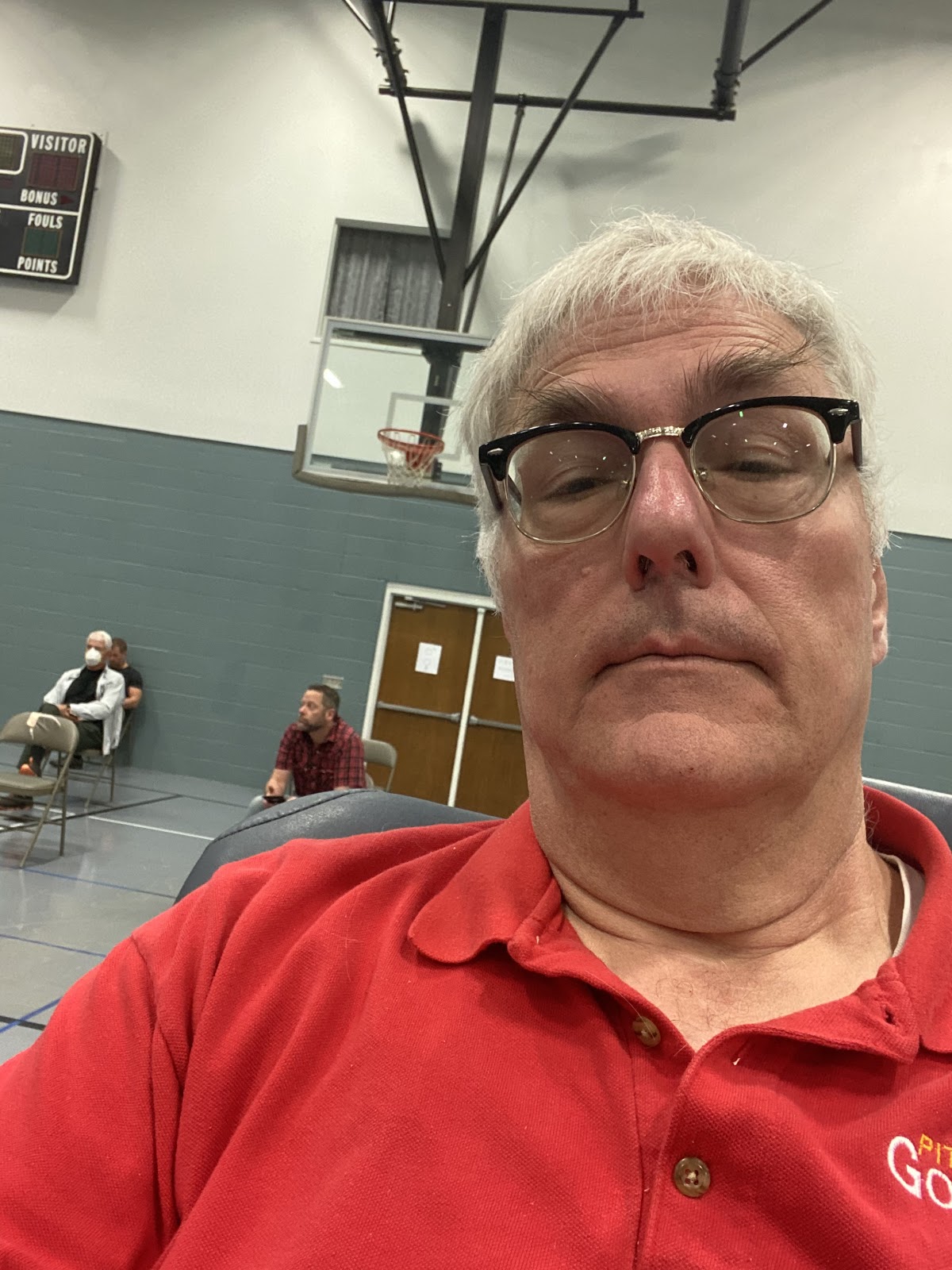
I went to give blood today at Countryside Christian Church. The Red Cross will be there again on Thursday, as the blood drive at the University has been moved there.
The experience was not unpleasant. When I walked through the door they took my temperature: 98.0 in case you are interested. All of the staff were wearing gloves and masks. They sat us in chairs that were spaced apart in accordance with social distancing. My appointment was at 9:45am so I got to the gurney about 11am and was eating raisins at 11:20.
It was, in other words, about par for a blood drive.
I took advantage of my freedom to get a prescription filled. They have the drive through open at Lindberg Pharmacy.
This afternoon I’ve been fighting the email war. I think I will mow sometime tomorrow.
Monday, March 30, 2020
The Okie in Isolation: The Dark 4am of the Soul
The Okie in Isolation: The Dark 4am of the Soul
By Bobby Neal Winters
There is a quote by someone--I want to say Winston Churchill--about waking up in the middle of the night with your thoughts when all of your old wounds begin to ache. That was me this morning. Spurred by some dreams that I don’t remember about graduate school, I got to thinking about a thing that had happened. I won’t be specific--some of my OSU friends will remember--but it concerned an incident of faculty impropriety. It’d been swept under the rug. I’d filed it away, but last night my unconscious found it and brought it out to play with. Thirty years have passed and I have a different perspective now.
My new perspective caused me to reinterpret the events. Reinterpreting is like eating peanuts: you can’t stop until the bag is gone and the floor is covered with shells. I strayed from my grad school days to the current shutdown of the country. In the darkness, my mind ventured into dark thoughts that daylight banishes. By the time I made myself get up, I had convinced myself that I would have to start living on pinto beans and get things to barter by scouring the curbs and allies, pushing a shopping cart with a broken wheel just ahead of me.
Getting up, making a pot of tea, and eating a bowl of oatmeal turned out to be a cure for this.
Taking care not to spread COVID 19 is important. That has been made clear. But taking care not to spread gloom and panic is also important. It is a tight-rope we walk: We must be vigilant; but we mustn’t despair. We must fight the good fight and keep the faith. We must share Hope:
By Bobby Neal Winters
There is a quote by someone--I want to say Winston Churchill--about waking up in the middle of the night with your thoughts when all of your old wounds begin to ache. That was me this morning. Spurred by some dreams that I don’t remember about graduate school, I got to thinking about a thing that had happened. I won’t be specific--some of my OSU friends will remember--but it concerned an incident of faculty impropriety. It’d been swept under the rug. I’d filed it away, but last night my unconscious found it and brought it out to play with. Thirty years have passed and I have a different perspective now.
My new perspective caused me to reinterpret the events. Reinterpreting is like eating peanuts: you can’t stop until the bag is gone and the floor is covered with shells. I strayed from my grad school days to the current shutdown of the country. In the darkness, my mind ventured into dark thoughts that daylight banishes. By the time I made myself get up, I had convinced myself that I would have to start living on pinto beans and get things to barter by scouring the curbs and allies, pushing a shopping cart with a broken wheel just ahead of me.
Getting up, making a pot of tea, and eating a bowl of oatmeal turned out to be a cure for this.
Taking care not to spread COVID 19 is important. That has been made clear. But taking care not to spread gloom and panic is also important. It is a tight-rope we walk: We must be vigilant; but we mustn’t despair. We must fight the good fight and keep the faith. We must share Hope:

Sunday, March 29, 2020
The Okie in Isolation: Sunday, Sunday
The Okie in Isolation: Sunday, Sunday
By Bobby Neal Winters
It has been a long time since I’ve seen such fine weather. It’s been like a hot summer day in England: It’s almost 70 outside. The sun is great.
I hosted Bible Study on Zoom this morning. Seven followers of Christ turned up to talk about the last chapter of the Book of First Corinthians. Not all shall sleep, but all shall be changed. I did seene of us nodding off, but I don’t think anyone else noticed.
We were all grateful to see our fellow human beings, other friendly faces.
Did Chili’s via DoorDash for lunch. It’s not the same experience as dining out, but it is a change. We will have nice leftovers tomorrow.
The town is quiet. It is a college town and all of the students have been sent home. This is like Christmas or Summer Break, but with better weather.
By Bobby Neal Winters
It has been a long time since I’ve seen such fine weather. It’s been like a hot summer day in England: It’s almost 70 outside. The sun is great.
 |
| The "weeping angel" over on Euclid and College |
We were all grateful to see our fellow human beings, other friendly faces.
Did Chili’s via DoorDash for lunch. It’s not the same experience as dining out, but it is a change. We will have nice leftovers tomorrow.
The town is quiet. It is a college town and all of the students have been sent home. This is like Christmas or Summer Break, but with better weather.
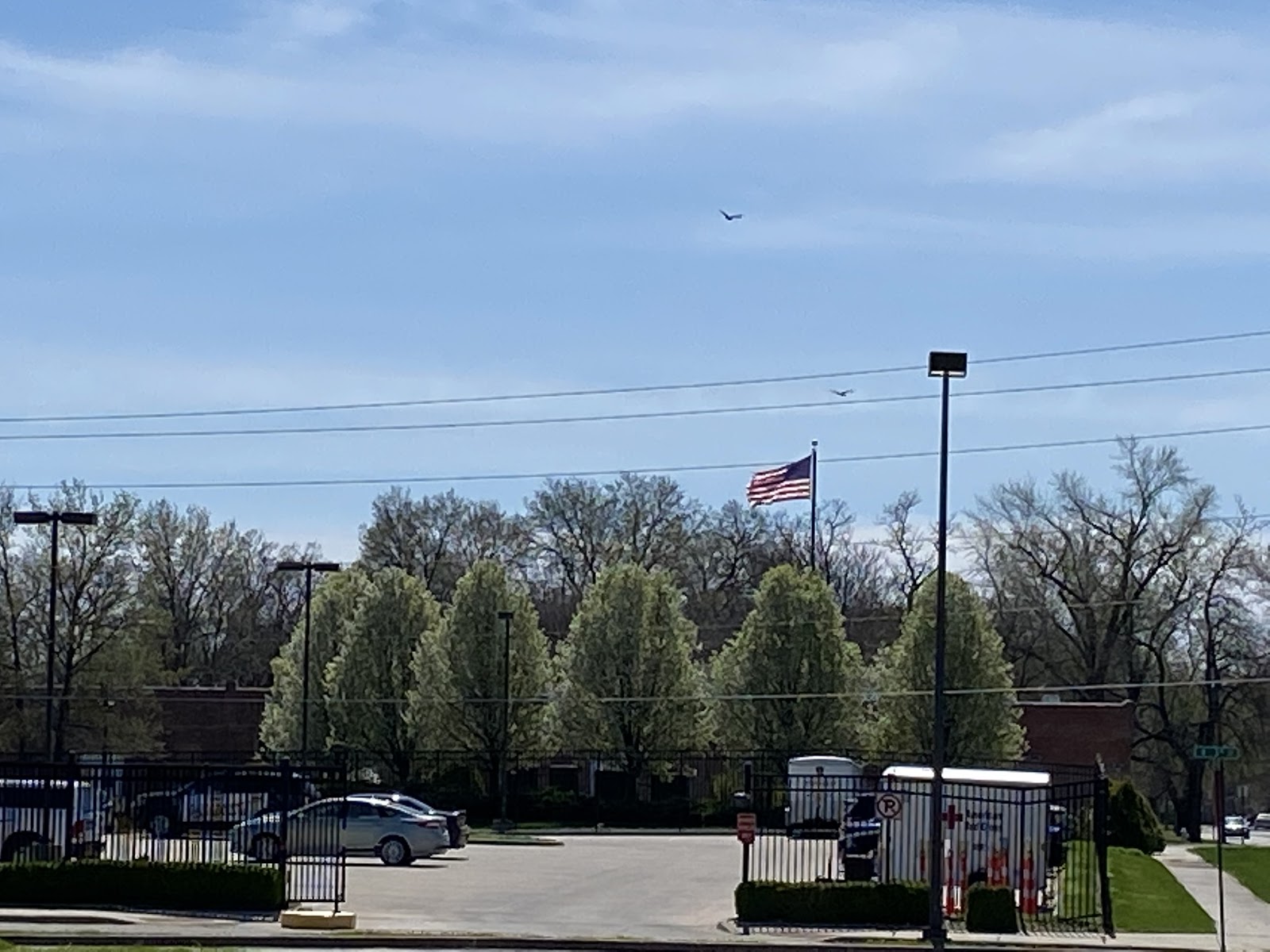 |
| Old Glory over the Pittsburg City Police Parking lot. |
Saturday, March 28, 2020
The Okie in Isolation: A Walk on Saturday Morning
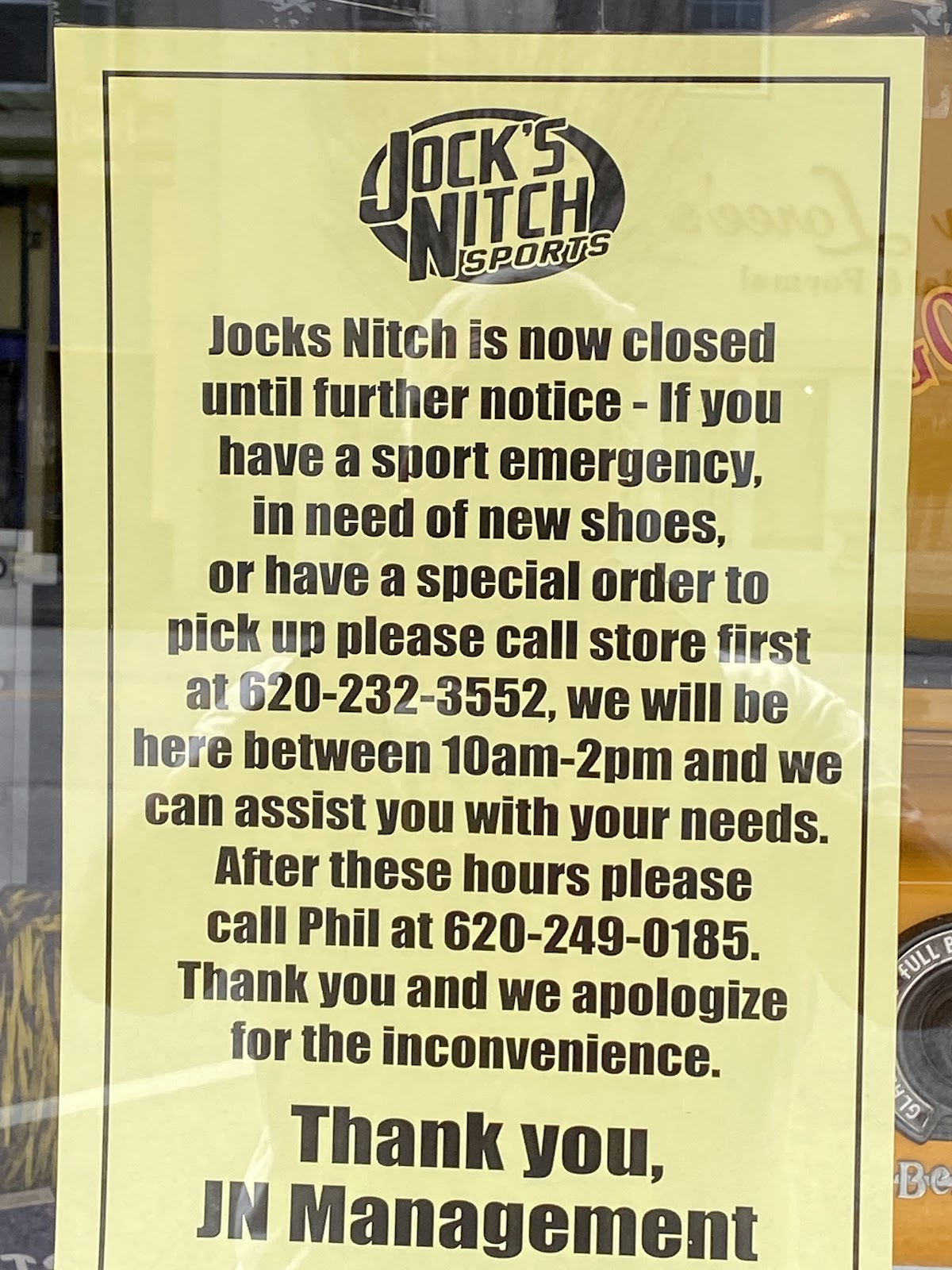 |
| This is the Jock's Niche. |
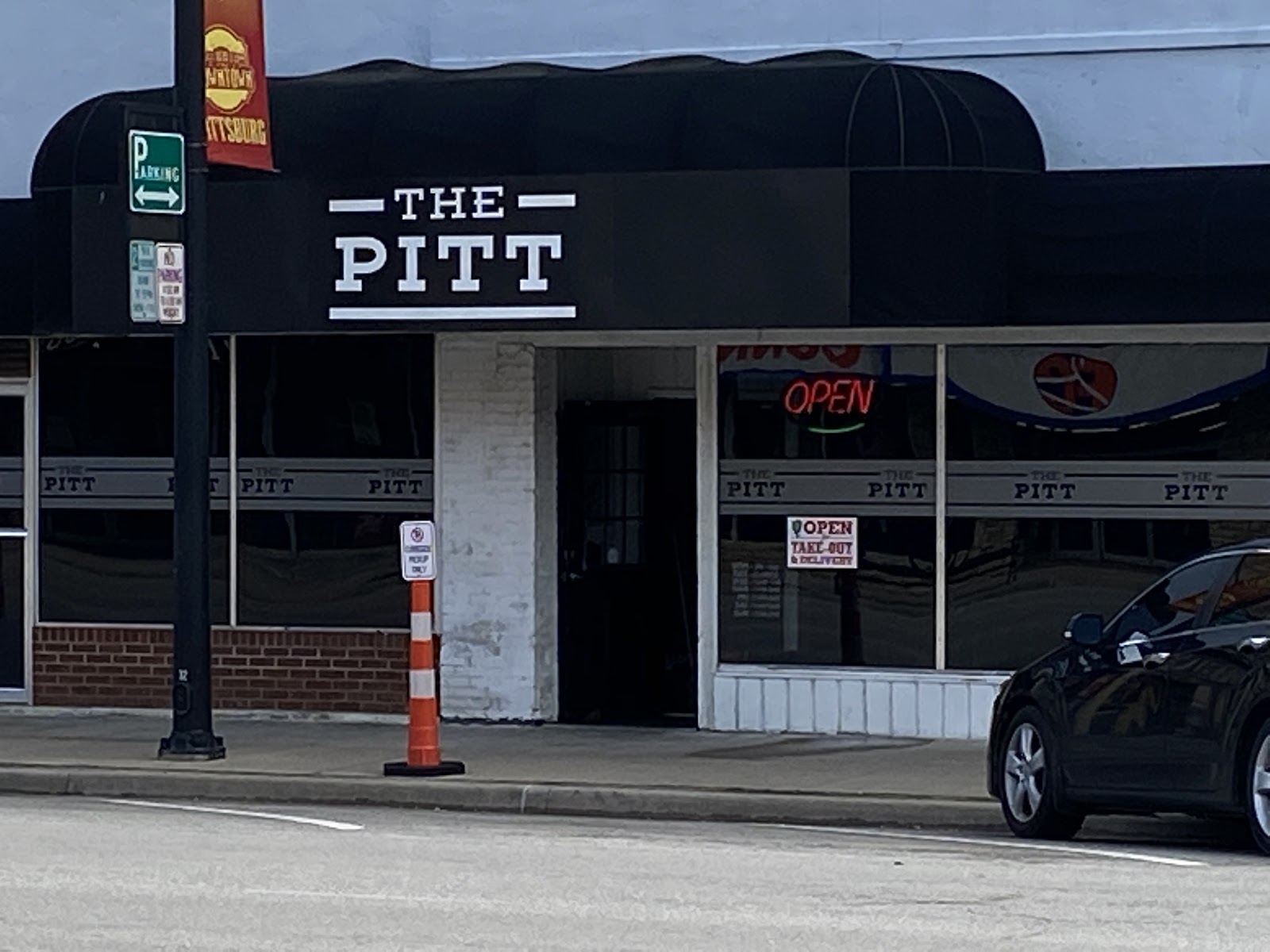 |
| The Pitt is open for Carry-out only |
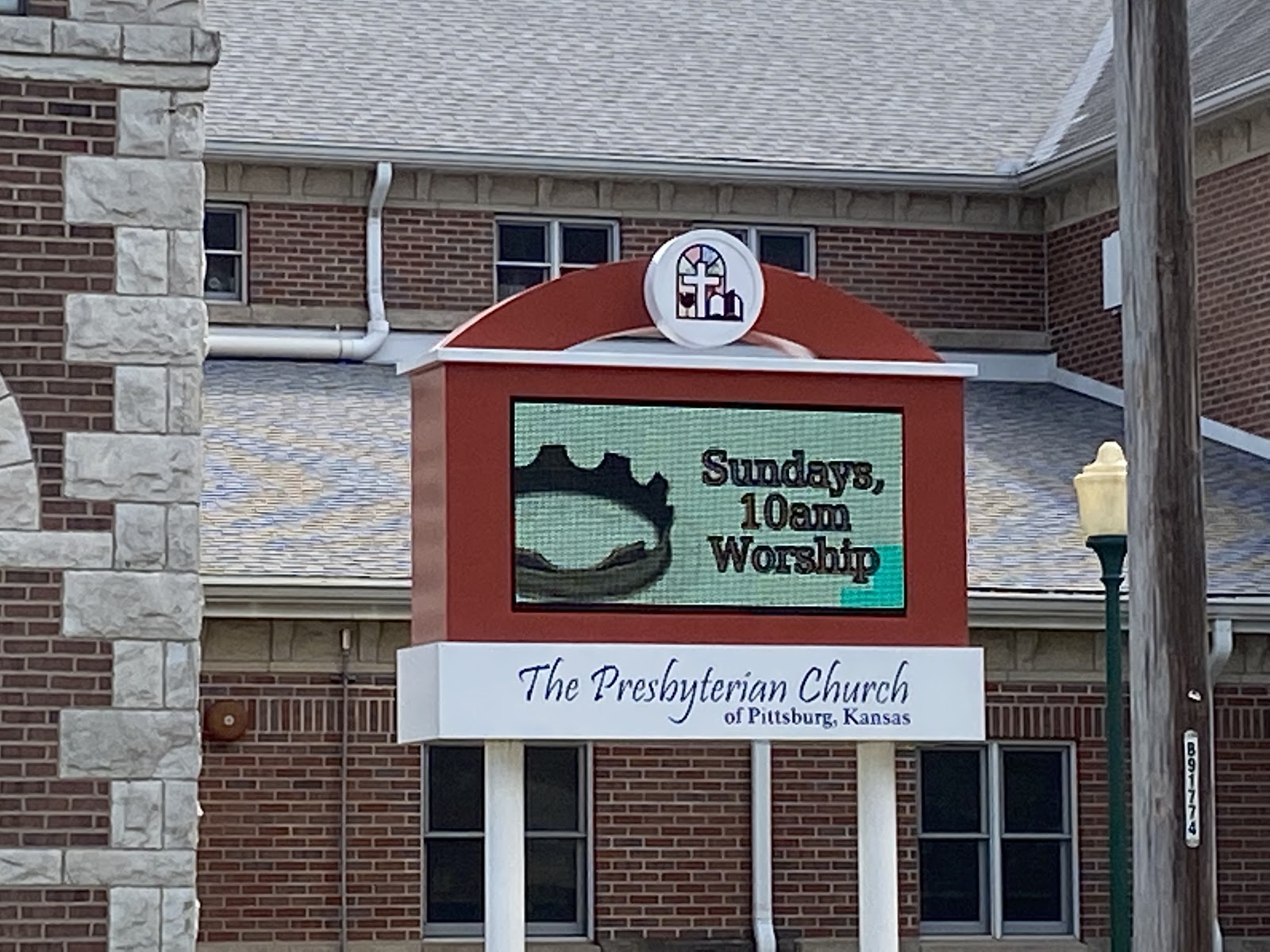 |
| You can worship online with the Presbyterians. |
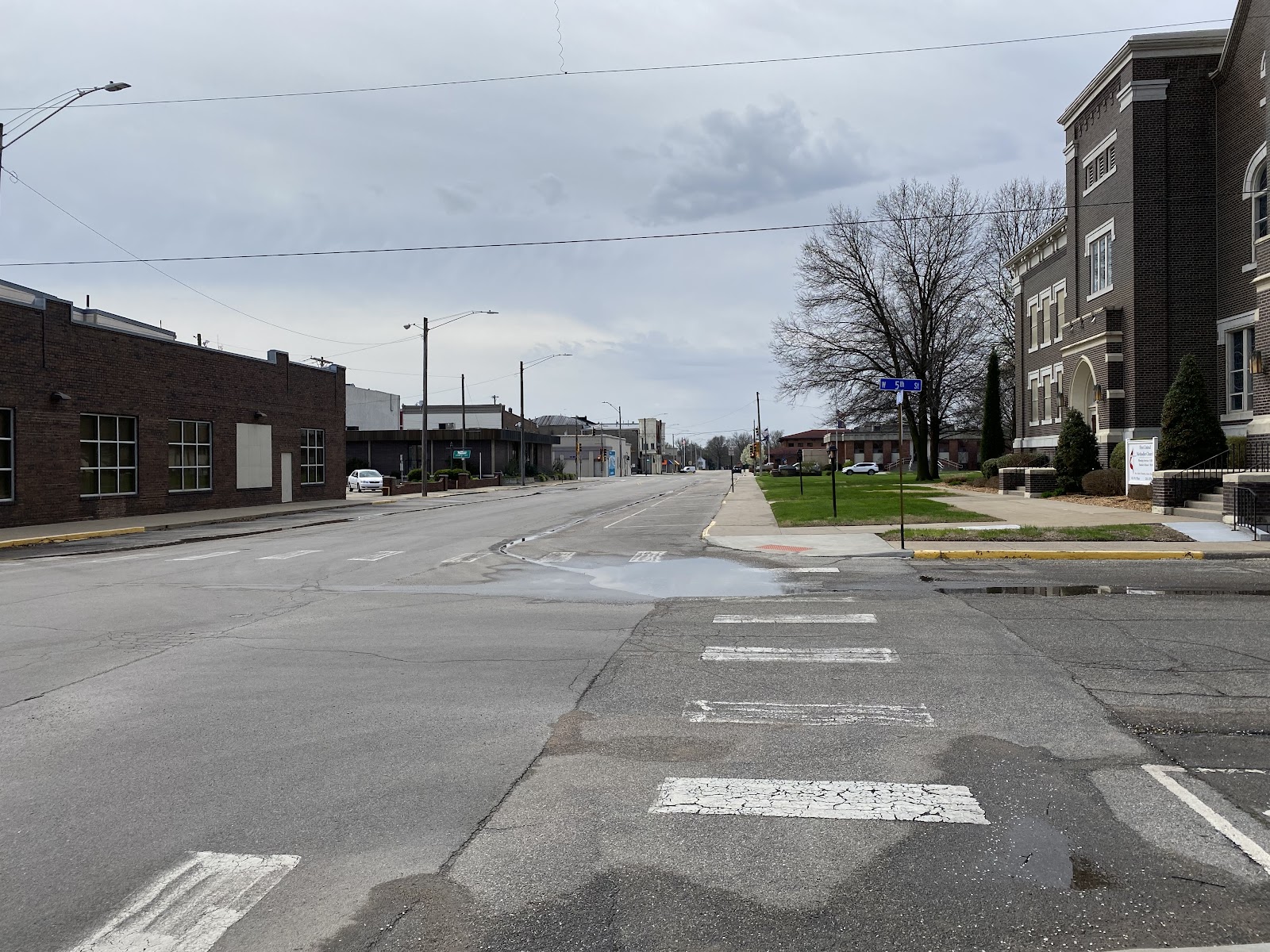 |
| It looks lonely in front of the FUMC |
 |
| Xanadu has been postponed. |
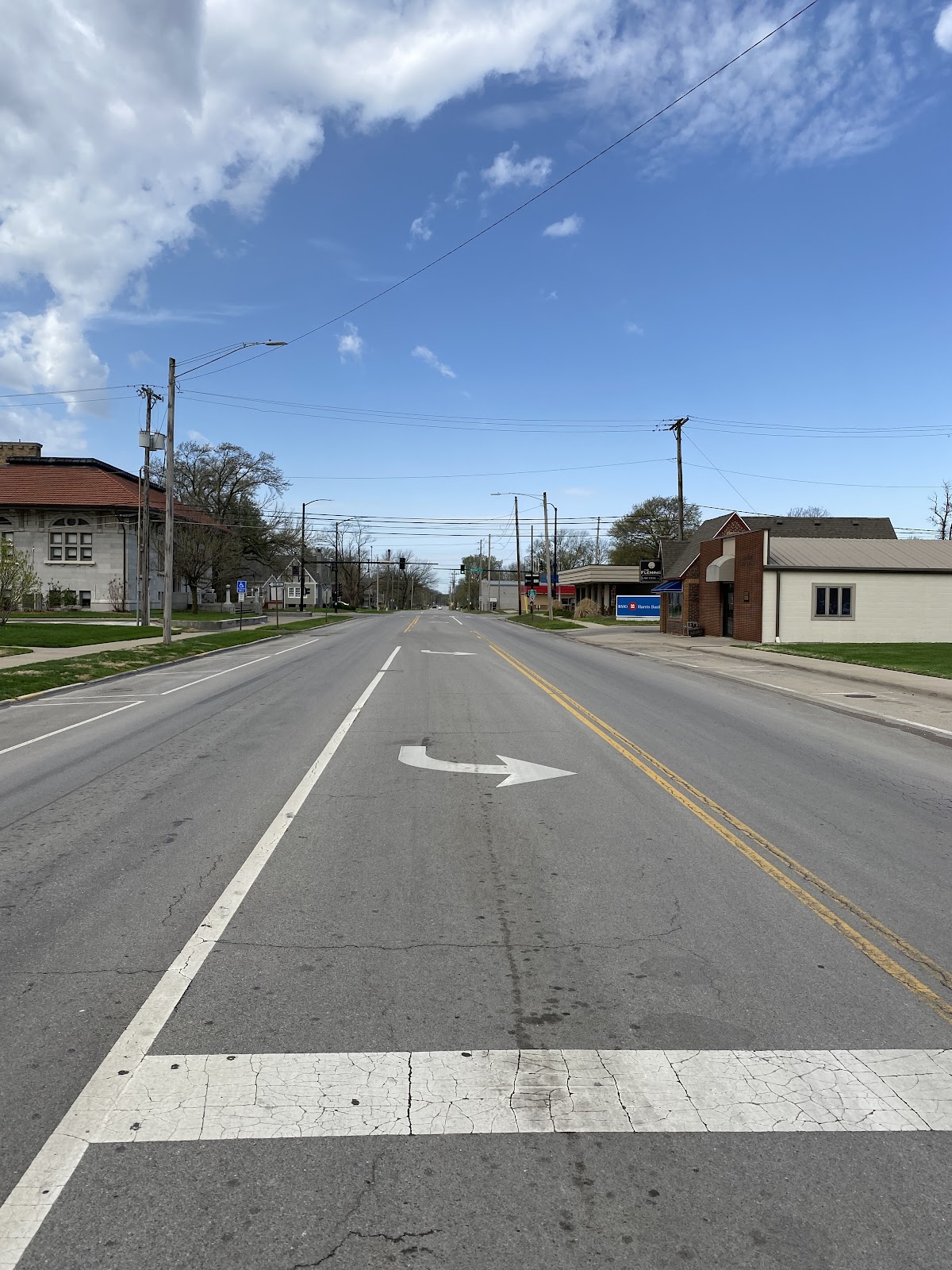 |
| Looks like an episode of the Twilight Zone |
 |
| The Library had the most helpful information. |
The Hazards of Battery-Powered Mowing
The Hazards of Battery-Powered Mowing
By Bobby Neal WintersWe are in the time of year when we will soon begin mowing. Indeed, my neighbor has started already. He re-seeds his yard every year and it just explodes in the spring. This is in contrast to my yard which just looks like something has exploded.
But I try. Or I try to try. Anyway.
NALM, the National Association of Lawn Mowers, has started an initiative about sustainable mowing. They are a very “woke” organization. Not long after COVID 19 got loose upon us they started promoting the fact that while you were mowing you were engaged in the act of social distancing. Everyone should be much more than six feet away from you.
I wish I’d taken that more seriously. Let me explain.
I bought myself a battery-powered mower. I should say that I had my son-in-law buy me a battery-powered mower. Well, that’s not exactly right either. My children are terrified that my wife and I are going to get COVID 19 and die in a paroxysm of agony because we are so old; and they are afraid we are going to give it to their grandmother and take her along with us; as a result of this they won’t let us go to the store. Therefore, my son-in-law bought me the mower from Home Despot (uh, Depot) and brought it to me. I then gave him money.
It is a 20-inch Ryobi. I got a Ryobi because my battery-powered hand tools are Ryobi. It uses the 40 volt 6 Ah lithium batteries. The 40 volt is how strong it is; the 6 Ah is how long it will last. It came with one battery and I have since bought another online. Let me say that most of the cost is in the battery.
Before I go any further, let me say I’d been thinking about this for a couple of years now, and the tipping point was the fact you don’t have to jerk on them to start. Press a button and mow.
Anyway, I’d gotten this and I was pretty anxious to try it out, but my lawn is not tall enough yet. Then I saw that the boundary between my yard and my neighbor’s was kind of tall. Well, I said to myself, let’s give this a little five-minute tryout.
That, I maintain, was a good idea. It was the next thing that was a mistake.
I invited my wife along so she could see it too.
I pressed the button and started it up. I made a run along the edge of my driveway. I then mowed the edge of my garage. In that one sentence lay the problem. Along the edge of my garage I’ve been...storing...some leftover fencing material. I’ve been storing it there for the last twenty years. You never know when you might need it. Lest any of you are afraid that I mowed over it and destroyed my mower, put those thoughts out of your head right now. The mower is still safe.
But...
My wife saw the pile of fencing material.
“You know,” she said, “I’m making a pile of scrap metal for the parquet scavengers. Why don’t we move that there?”
“Sure,” I said. I suddenly found myself in a rendition of “If you give a mouse a cookie.”
As I mentioned, that pile had been there for twenty years. It was chain-link fence and small trees had grown up through it. It took pliers, hacksaws, shovels, adzes, angle-grinders, and two hours to move that pile. During the course of doing this, we were attacked by a very aggressive and possibly venomous snake.
That was yesterday morning. It rained in the night, and you can’t even tell I mowed that strip of grass.
I’ll be needing to recharge my battery.
Bobby Winters, a native of Harden City, Oklahoma, blogs at redneckmath.blogspot.com and okieinexile.blogspot.com. He invites you to “like” the National Association of Lawn Mowers on Facebook. )
Friday, March 27, 2020
The Okie in Isolation: Mowing the Edge
By Bobby Neal Winters
You will all understand the rest of this if you know that our children are terrified that Jean and I will get COVID 19. They are isolating us from themselves and our grandchildren who are filthy little vectors. They’ve gone as far as parking one of their cars in our driveway and not moving it to let us out. They run errands for us and bring us stuff so that we won’t get exposed.
This may be the best thing that has ever happened to Jean and me.

Saturday I decided that it was time to buy a battery-powered lawn mower. (I will tell about this at greater length in my weekly column in the Morning Sun.) This week has been wet and most of my grass--as there is such variety within my lawn--is not ready to mow yet. But along the edge with the neighbor it is quite a bit taller as he does take a lot better care of his lawn.
I decided that I would mow the edge and I used the opportunity to show the new mower off to my better half. The rest, as they say, is history.
While I was mowing, Jean got a look at a pile of old fence posts and chain link fence wire that I have been mowing around (had been mowing around) for about 20 years.
Jean has been cleaning up the yard over the course of the Great Isolation and is throwing away some stuff. She saw my pile, and said, “Let’s put that in my metal pile.”
Over the years we’ve noted that if we leave metal on the parquet that it doesn’t sit there long. It will soon be picked up by enterprising young men who will sell it at scrap.
I said, “Sure.”
It has been 20 years. There were small trees that had grown up through the wire. It took two hours with various implements of destruction to get this out.
Moral: Don’t let your wife watch you mow!
Thursday, March 26, 2020
The Okie in Isolation: Thursday
By Bobby Neal Winters
It is a beautiful day.
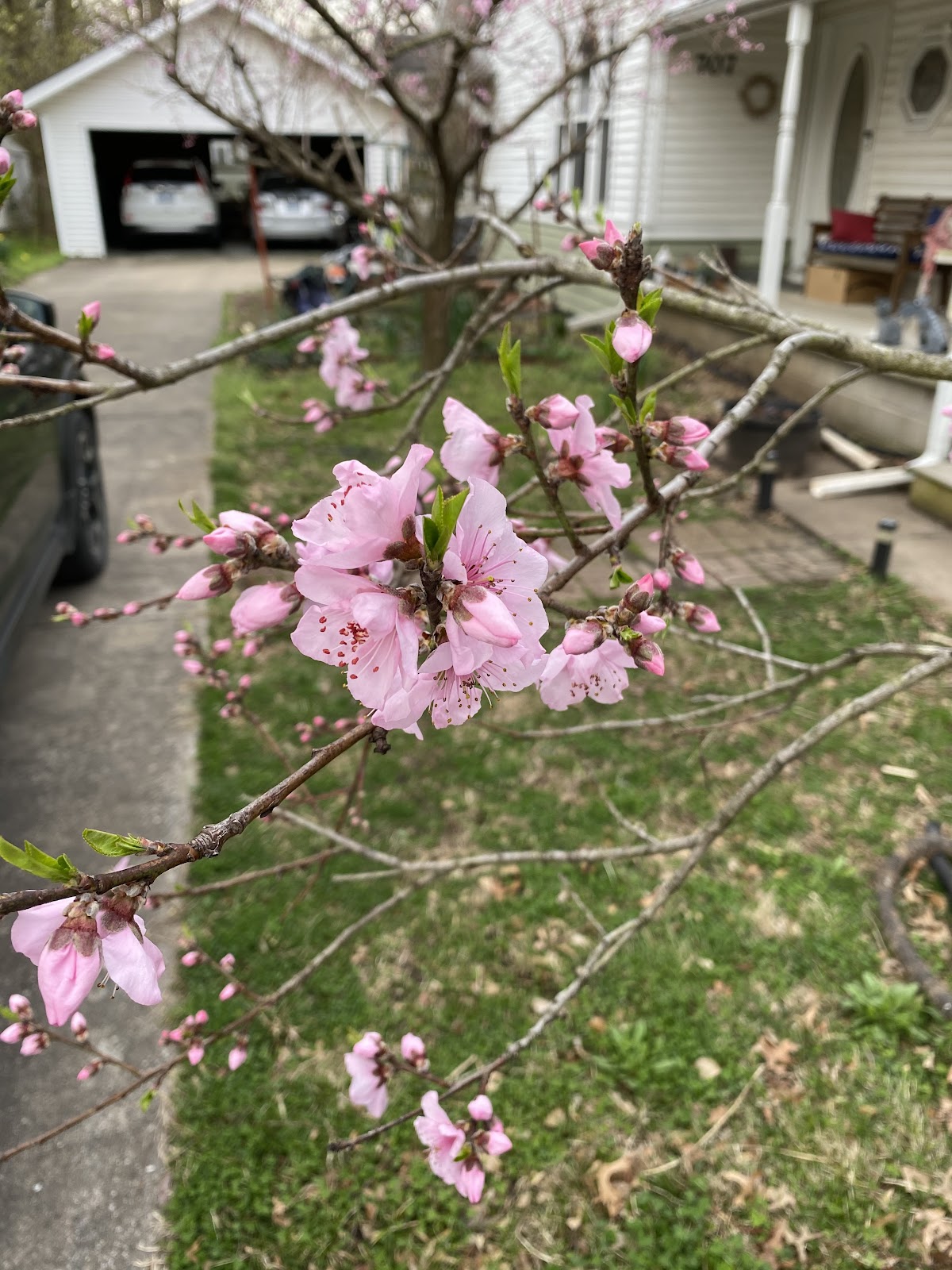
I did my walk and took a picture of the Cross which has been dressed for Lent. There is a nice (in the sense of being strong) breeze and bright sunshine.

My back has not hurt on any of the walks I’ve taken this week. This is why I’ve set my sights on losing the weight. There is cause and effect going on here. My weight goes down, ergo my back hurts less. Less weight = less pain. Sometimes doing the obvious thing works.
Wednesday, March 25, 2020
The Okie in Isolation: Disease Modeling
The Okie in Isolation: Disease Modeling
By Bobby Neal Winters
Another beautiful day has dawned. I’ve made it successfully to Wednesday of Spring break. My day consists of getting up; stretching; showering; breakfast; doing my languages on Duolingo; and then my email. While I have been instructed to get some rest during this period--and I am as having an electronic wall between me and everyone else reduces stress--the emails do come through because the university is still working. We are working in isolation, but we are working.
The emails trickle into my inbox, and the rate is small, but if I don’t take care of them they will turn into a lake by the time next Monday rolls around.
For entertainment while I work, I turn to YouTube. It provides some soothing background noise. An interesting video that came out today was on Flattening the Curve by Numberphile. They discuss the SIR mathematical model of disease transmission. The SIR is an acronym where S stands for the number susceptible, I stands for the number infected, and R stands for the number recovered. Recovered is something of a euphemism because it includes the number of the dead. The mathematics of this only cares about those who aren’t capable of getting it again. A special case can be modeled by the equations below:
N = S + I + R.
Geeks like me know what those fractions on the left are. The rest of you should think of them as rates of change with time. On the right side, we’ve thrown in the Greek letters beta and gamma to assert our superiority over you. It is like when chimps toss poop, but not requiring soap to wash with afterwards.
The first equation says that the number of susceptible individuals will decrease as more people get it; you’ll either gain immunity or die. So beta is how quick you succumb.
The second equation says that the rate of infection will increase as a higher proportion of the population gets it, but once you’ve got it you're no longer at risk of getting it. (Oh boy!)
The third equation says that the rate of the number recovering is proportional to the number who have it. So gamma is how fast you get well/die.
The number beta is what we are fiddling with by urging people to stay at home. The folks on Numberphile have this animated and explain it in more detail for those of you who are interested.
So stay home and decrease beta.
By Bobby Neal Winters

Another beautiful day has dawned. I’ve made it successfully to Wednesday of Spring break. My day consists of getting up; stretching; showering; breakfast; doing my languages on Duolingo; and then my email. While I have been instructed to get some rest during this period--and I am as having an electronic wall between me and everyone else reduces stress--the emails do come through because the university is still working. We are working in isolation, but we are working.
The emails trickle into my inbox, and the rate is small, but if I don’t take care of them they will turn into a lake by the time next Monday rolls around.
For entertainment while I work, I turn to YouTube. It provides some soothing background noise. An interesting video that came out today was on Flattening the Curve by Numberphile. They discuss the SIR mathematical model of disease transmission. The SIR is an acronym where S stands for the number susceptible, I stands for the number infected, and R stands for the number recovered. Recovered is something of a euphemism because it includes the number of the dead. The mathematics of this only cares about those who aren’t capable of getting it again. A special case can be modeled by the equations below:

Geeks like me know what those fractions on the left are. The rest of you should think of them as rates of change with time. On the right side, we’ve thrown in the Greek letters beta and gamma to assert our superiority over you. It is like when chimps toss poop, but not requiring soap to wash with afterwards.
The first equation says that the number of susceptible individuals will decrease as more people get it; you’ll either gain immunity or die. So beta is how quick you succumb.
The second equation says that the rate of infection will increase as a higher proportion of the population gets it, but once you’ve got it you're no longer at risk of getting it. (Oh boy!)
The third equation says that the rate of the number recovering is proportional to the number who have it. So gamma is how fast you get well/die.
The number beta is what we are fiddling with by urging people to stay at home. The folks on Numberphile have this animated and explain it in more detail for those of you who are interested.
So stay home and decrease beta.
Tuesday, March 24, 2020
The Okie in Isolation: DoorDash and the Johns Hopkins Map
By Bobby Neal Winters

We did Mexican last night. I discovered DoorDash. It is an app that lets you order food from local restaurants and have it delivered. You put in your credit card; select your restaurant; choose your order from their menu; and order it. You will have put in your credit card and your address when you set up the app.
They bring it to your door and leave it there. You don’t have to meet them. Just pick up the sack with tongs, dressed in your hazmat gear and you are good to go.
We had a nice meal and felt better out ourselves for supporting one of my favorite restaurants in town.
In addition to El Caballo de Oro, they deliver for Wendy’s, Sonic, and a number of others.
I’ve been thinking about how this disease (or any disease) is transmitted. I’ve been looking at the Johns Hopkins map. It shows the number of those infected and the number dead. Zooming in on the Kansas map, I was stricken by how the cases were distributed in Kansas. Highway 69 is a straight Euclidean line coming directly out of Johnson and is clearly delimited by the little red dots of contagion.
Johnson county as of this writing has 32 confirmed cases. Highway 69 is the way we get there from this part of the state. I suppose that if anyone wanted to use this it would help make a case about how important Highway 69 is to this part of the world. There would be those who would say, yeah, it brought us disease; I can’t argue with that: It brings us everything.
The map does provide a good illustration of how disease spreads. You get first in the hubs, the places where the roads cross. From there it spreads to the secondary hubs. From Chicago to Kansas City; from Kansas City to Pittsburg; from Pittsburg to Girard; from Girard to Hepler.
These transitions take time. Lowering the bump means increasing the length of time in these transitions.
Take this same model and move it to a town. Say a Rotarian comes back from Johnson County with the disease. She gives it to people in the club. They go to church the next Sunday, not know they have it. They give it to Catholics, Methodists, Presbytereans, and Baptists. They send their kids to school and day care and bam, it is everywhere.
So we shut down the local hubs. We watch some more TV. We order in. Some DoorDash from Sonic sounds good. Maybe tomorrow.
Monday, March 23, 2020
The Okie in Isolation: Spring Break Begins
By Bobby Neal Winters
I am at home. This is the seventh day in a row that I’ve been at home.
It’s not too bad so far.
Though you can’t tell it, since I’ve written those first three sentences
I’ve set up a telephone appointment with my bank;
Walked around the block;
Called Bubba on the phone (this was done simultaneously with number 2 above);
Used a battery-powered angle-grinder to turn a Tea-tin into a piggy bank for my youngest grandson.
Let’s expand on those in reverse order.
(4) My wife has taken it as a quarantine challenge to potty-train my youngest grandson. As an aid to doing this, she is giving him coins as a reward. She first attempted using pennies. To this my grandson replied: “No grandma, big pennies.” He’s not yet potty-trained but he can negotiate. I think this needs to be rewarded, so he’s going to get a home-made piggy bank for his “big pennies.”
Pig pennies, by the way, are quarters, and my wife is taking them from my change flowerpots. That’s fine.
(3) Bubba is trapped in his house as well. He isn’t dealing with the quarantine stoically. He has a good imagination and has never used it to imagine anything good. I suspect this is because he’s had too much pain and disappointment in his life. So I talked with him and it did us both a world of good.
(2) I talked while I was walking because I am a Fitbit slave. I’ve decided this isn’t a bad thing during the Great Isolation. We need to have structure; we need to keep moving. Walking around outside is a good reminder that there is a lot of good in the world. There are no unburied bodies in the street yet. Everyday that happens is a good day.
(1) My wife and I began the process of estate planning. Having put together a revocable trust, the attorney gave us a letter of things we needed to do. I immediately put that aside for “later.” That was about 4 months ago. It is now later. It turns out there are only a few things we need to do because--and I cannot stress this too much--we don’t have anything. Having said that, we need to move our meager savings into the trust. Therefore, I set up a phone call.
Happy first day of Spring Break
Saturday, March 21, 2020
Hello from the Churn
By Bobby Neal Winters
I learned how to do a Microsoft Teams meeting this week. So did a lot of other people. If you have Microsoft 365, it is an easy thing to do. I got a google phone number this week. Changed my message at work so that it will tell people to call my google number and get me at home. It’ll either forward to my cell phone or to voicemail. It also lets me use my computer as a phone.
With the inevitable exception here and there--to small to mention but I will because otherwise you’ll think I am lying--everyone has pulled together like troopers. We’ve switched to problem solving mode. Things which would have labored through the system at a snail’s pace (actually snails talk about how slow universities are) have simply happened: “So let it be written; so let it be done!”
We can do this!
I am a fan of the Expanse Novels written by James S.A. Corey. As various points, these books refer to something called “the churn.” The churn is a generic term for a time of rapid changes. There is a “before” and an “after” and in between there is the churn. During the churn the world is reordered. The first shall be last and the last shall be first.
There will be more online meetings from now on germs or no germs. It is just too danged easy to do.
I consider myself to be tech-savvy, but I discovered that I’d been doing things the hard way for a long time with some of my software. Having discovered these new ways, it is like scales have fallen from my eyes. I want to go out into the world and preach the best practices of software use.
Halleluyah! Do I have an Amen on Sharepoint?
And our children, the much maligned Millennials, they were born to this. My 21-year-old daughter was watching some of my compatriots and I struggle through the process of learning some of the things that she just knows. She said, “This is painful to watch.”
None of these things is hard to learn. We just put off learning them because we didn’t have to. The system was working the way things were so we put off the five minutes that it took to learn to change our phone messages; to set up a Teams meeting; to do Zoom; to do VigGrid; to get Google Voice; to use Microsoft 365.
Then there simply was not a choice and we did it. There is no going back. Even if you didn’t learn, enough people know how easy it is that you won’t be let off the hook now. You will have to learn to do this or you will be left behind and laughed at.
Not everybody has Microsoft 365. However, if you have Facebook and a webcam, you can have face to face conversations with anyone else who is similarly equipped. I bet your grandchildren are. There are videos on Youtube for how to do this.
This is the churn. This is the year you learn how to use all of the technology that you’ve been ignoring. You are trapped inside with your computer. Figure out what it's all about. We will be doing many things a different way from now on.
Restaurants are going to have to be nimble. Sure, there will come a day when we all start eating out again. In the meantime, a lot of restaurants have switched to serving take out. Some of them by phone; some with online ordering and payment; some will do all of that and deliver on top of it all.
Here’s a hint guys: The easier you make it, the more business you will get. When this is all over, you will still know how to do this, and you will still get business this way. If you don’t you won’t.
It is a time of change. It is the churn.
Bobby Winters, a native of Harden City, Oklahoma, blogs at redneckmath.blogspot.com and okieinexile.blogspot.com. He invites you to “like” the National Association of Lawn Mowers on Facebook. )
Subscribe to:
Posts (Atom)