Saturday, January 15, 2022

Some Applied Mathematics

 Some Applied Mathematics

By Bobby Neal Winters

Take control of your space.

That is the advice I gave to my students when I used to teach the introductory level math courses.  You need to find a quiet place.  You need to have your paper, your pencil, your eraser, and your calculator all right there.  If you need a protractor, a ruler, or a compass, have them all at hand.

Have your space organized and free of distractions.  Don’t tolerate invasions of it. It’s okay if someone borrows your protractor, but make them put the son of a gun back.

But control and order are the words of import.

Once you have control, you can proceed.

This is for basic mathematics.  The strength of higher mathematics is the abstraction.  Take a simple, concrete, easy-to-understand notion and raise it to a higher realm of thought.

One of the jobs that I have--either done one way or another--is helping students who are in some sort of academic trouble. A lot of this--and I didn’t keep track of the numbers, but a lot--is caused by not being in a stable situation at home.  They are in a position where they can’t set up the study environment that I described above.  It could be there are financial issues; it could be the parents have problems; it could be drugs and alcohol.

Whatever the reason, there is instability. Until that is fixed, the student is not going to have their best shot at an education.  Indeed, until that is fixed, the student--the human--is not going to have a good shot at life.  If they can get that instability fixed, it will be more important to them in the end than 100 college degrees.

They need to get control of their space.

Sometimes--often--the issue is deeper. The instability lies within themselves. Sometimes the drugs and alcohol are simply self-medication for a deeper illness.  We are getting a better understanding of mental health issues, and I hope we are on our way to being more enlightened. This is a hard step because at the mildest people with mental health issues can be annoying and sometimes they can be scary.

There are things that can be done with self-discipline, daily routines, building good habits, and counselling, but sometimes meds are the only way.  The meds, well..Sometimes they work better than others. They are hard to get calibrated to begin with, and then they can get uncalibrated and everything comes to pieces until the right mix can be found again.  

I’ve seen it over and over and over from multiple angles. 

But many people are striving with it in silence.

In order to proceed they must get control of their space.  It will be of more worth to them than 1000 college degrees if they do.

I am currently putting a workshop together.  That’s what has me thinking about all of this.  There are certain items that you have to have.  You have to know where they are.  That means that you have to have a place to put them; the way that things are stored has to make sense; and you have to put things back once you’ve used them.  You can loan things out, but when they are returned--if they are returned--you need to be sure they are back where they belong.

Because this is your space.

This transfers to the job as well.  You can see how a bookkeeper might do this; you can see how someone in the trades might; but it is also applicable in management.  There are certain things that have to be kept in order; certain things that need to be controlled.

But it is all the same principle.

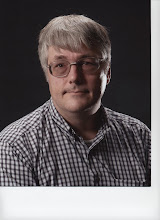
Bobby Winters, a native of Harden City, Oklahoma, blogs at redneckmath.blogspot.com and okieinexile.blogspot.com. He invites you to “like'' the National Association of Lawn Mowers on Facebook. Search for him by name on YouTube. )


Friday, January 07, 2022

The Holy Trinity of the Frontenac-Pittsburg Metroplex

 The Holy Trinity of the Frontenac-Pittsburg Metroplex

By Bobby Neal Winters

The leaders of commerce in this town are creating a paradise for us on the northern end of our lovely metroplex. They have created a Holy Trinity of stores for those of us of a certain turn of mind.

In the beginning were two words and those two words were Home Depot (which I sometimes jokingly turn into Home Despot--such jokes are more effective from more reliable spellers than me). And Home Depot was god and that god sat kitty-corner across from where Wal-Mart used to be.

Then came Tractor Supply.  Tractor Supply isn’t as showy as Home Despot (there I go), but it’s impressive.  The thing is that it has more than just supplies for tractors.  There is stuff in there that you didn’t know you wanted until you saw it.  There is stuff in there that would be better than gold to the sturdy men and women who carved this nation from the wilderness.

Now, at last, we have the completion of the Holy Trinity; the icing on the cake; the bow on the gift: Harbor Freight.

I’d only been to Harbor Freight once or twice in my life, and that was in Joplin.  To tell you the truth, I wasn’t very impressed.  That could be because I just didn’t look it over; or it could be because the one we have in the Frontenac-Pittsburg metroplex is just better.

I made my third trip to our new Harbor Freight yesterday, but this was my most important trip, because it’s the first time I’d been there alone.  My wife had been with me before, and as my fellow husbands can share, having the better half around affects matters.

Harbor Freight is the equivalent of a toy store to a certain turn of mind.  And what I said of Tractor Supply is even more true of Harbor Freight: There is stuff in there that you didn’t know you wanted until you saw it.  Then you might not know what it is, but you still want it.

I went there looking for something.  I didn’t find it, but I found a couple of other things I needed at a price below what I could’ve bought it for online.

I began this piece by praising the leaders of commerce in the area.  It could be that this happened by accident.  One has to be careful praising anyone from City Hall or downtown because sometimes it goes to their heads.  Luckily, we’ve got people who will complain if they buy sand for the roads because it might not snow; then they will complain if it snows, and there’s not enough sand.  There is no winning.

In any case, our current state of affairs is such a nice turn that it looks like design, so I am going to risk praising someone even if it’s not by name and even if they didn’t do it.

So excuse me.  I am now going to finish this up and make a run to the north end of town.

Bobby Winters, a native of Harden City, Oklahoma, blogs at redneckmath.blogspot.com and okieinexile.blogspot.com. He invites you to “like'' the National Association of Lawn Mowers on Facebook. Search for him by name on YouTube. )


Saturday, January 01, 2022

Taking a Table Saw to the Tree of Knowledge

 Taking a Table Saw to the Tree of Knowledge

By Bobby Neal Winters

In the cult classic, The Gods Must Be Crazy, a tribe of hunter gatherers finds a Coke bottle, and it is such a strange, versatile object, it sows discord among the tribe, and the bulk of the movie consists of our hero on a journey to get rid of it.

The message of the film is that this primitive tribe, by virtue of taking this action, is wiser than the more “developed” peoples who created the bottle.  

If only you could just throw problems over a cliff and they would disappear into the clouds.

In our tradition, that notion was dealt with early.  When we ate from the Tree of Knowledge of Good and Evil, we were thrown out of paradise, and an angel with a flaming sword was put at its entrance to keep us from going back.

When you learn something new, there is no unlearning it.  The cat is out of the bag, the genie is out of the bottle.

It is just there.

What the righteous must do is to learn how to deal with it now that you know about it.

We’ve been cleaning out an old house we use for storage. In the course of doing that, we did two things: We found a table saw that belonged to Jean’s father and we cleaned out enough floor space that it could actually be used.

Over the last 32 years I’ve been in town, there have been many occasions when I could have used a table saw.  There have been many occasions when a table saw was exactly what I needed. And on every single one of those occasions I’ve had to figure out some other way to do what needed doing.

I’ve sawed boards in every conceivable awkward position you can imagine.  I could’ve written the kamasutra book of carpentry. Now here within my very grasp is a table saw.

Here’s the thing though:  I don’t know how to use a table saw.

And a table saw is a thing that needs knowing before you use it.

There are two types of people who just read that sentence.  One is confused because a table saw is very simple to use. You plug it in, turn it on, and slide a board across the blade. Very easy.  The second type of person says, yes, and you might very well have a few fingers laying loose when you are done.  (When I looked at the safety videos on this on YouTube, one emergency room physician remarked that reattaching fingers is not quite as easy as you may have been led to believe.)

The table saw is a simple device that you still have to learn to use.

That is true for every single thing that was ever invented.  The invention of the thing is only a small part of the story.  The rest of the story is the world learning the best way to use it.

Consider the knife, or more generally, the cutting edge.  Somebody came upon a sharp piece of flint.  He or she discovered you could cut with it. Somebody else figured out you could kill animals with it. Somebody else discovered you could cut your food into smaller pieces with it. Somebody else discovered you could kill people with it.  Now we’ve got it in operating rooms and wood carving sets.

The thing came into the world; there was no putting it back; then there was learning how to deal with it.

So I am spending some time learning the right way to use a table saw.  I am determined to leave this world with the same number of fingers that I came into it with.  I hope they don’t have to put them in a tupperware dish in the casket with me.

Bobby Winters, a native of Harden City, Oklahoma, blogs at redneckmath.blogspot.com and okieinexile.blogspot.com. He invites you to “like'' the National Association of Lawn Mowers on Facebook. Search for him by name on YouTube. )


Thursday, December 23, 2021

Half a Million Miles an Hour

 Half a Million Miles an Hour

By Bobby Neal Winters

On Tuesday, January 4, 2022, the planet Earth is at perihelion--its closest point of approach--to the Sun.  The Earth, on the average, is speeding around the Sun at almost 67 thousand miles an hour.

But we don’t notice it.

Our bodies don’t sense speed, or velocity, per se. Rather our bodies experience change in velocity, what the physicists call acceleration. There is acceleration, but it is mainly a change in direction as we go in a circle around the Sun.  This acceleration is small, on the order of a degree per day. (I am leaving out the rotation of the Earth here, because it doesn’t fit my New Year theme. Deal with it.)

All this to say, the human race has been going 67 thousand miles per hour its entire existence and has never felt it.  We know it now.  A few people choose not to believe it, but it is a known thing.

Last year at this time people were happy to be done with the year 2020.  They were looking forward to 2021 as a bring of new things, but it turned out, 2021 was just a knock-off sequel like 2020, Part 2: Delta Force. 

We feel like nothing has changed.

And in a certain sense we are right.  Human beings are still chimpanzees with nuclear bombs, alcohol, and cell phones.

In another sense, we are still going through space at 67 thousand miles per hour...in a circle.

However, there are other things going on. There are other directions of movement.  The Sun--and Earth with it--are traveling around the center of the Milky Way Galaxy (Is there a Snickers Galaxy somewhere? Maybe we should take that name because of all the nuts.) at almost half a million miles per hour.  This is even more imperceptible to us because the acceleration is even smaller.  

The Sun has been moving at this speed for billions of years, irrespective of us or any living thing on the planet.

There are things that are moving us great distances that we are completely unaware of.

Think of the things you can watch on TV now that would’ve shut down the networks for showing it in the 1970s.  There are now things on television that would’ve scandalized truck drivers in those days. The change happened, and was allowed to, because it happened slowly.

We’ve been annoyed since early 2020 because a lot of changes have happened fast.  In the long run, the big changes won’t be the things that stick around. We’ve noticed them.  The things that stick around will be the small things we’ve picked up along the way.  

When a fly annoys you, you swat it very quickly.  The fly will be gone, but the stain the flyswatter leaves might very well remain.

In any case, a New Year is coming.  The number at the end changes from 1 to 2. Life goes on.

The New Year will be full of love and blessings.  Don’t let them slip past you.

Bobby Winters, a native of Harden City, Oklahoma, blogs at redneckmath.blogspot.com and okieinexile.blogspot.com. He invites you to “like'' the National Association of Lawn Mowers on Facebook. Search for him by name on YouTube. )

Saturday, December 18, 2021

Counting Calories and Grapes

Counting Calories and Grapes

By Bobby Neal Winters

We are coming to the New Year and the time of resolutions.  Many of you will resolve to lose weight.  This gives me a legitimate opportunity to share.

A few weeks ago I shared that I had started a diet.  As one of my former colleagues said, “Again.”  I also shared that I didn’t have any illusions, and I don’t.

But it has been, and continues to be, a learning experience for me, and, because it is my purpose in life, I will share what I’ve learned so far.

This is the Noom program that you may have seen advertised.  It does cost money, but I found the pricing to be fair.  If I were to describe the Noom approach in one word it would be “mindfulness.” As that one word brings up images to me of sitting on the floor in lotus position in loose-fitting clothes and your palms turned upward while you are looking into the distance saying “OOOOOOOMMMMM,” let me expand on it a little.

What mindfulness is is all there in the word itself.  You are mindful of things. To unpack that a bit more, you pay attention to what you are doing.

The Noom program has made me pay attention to what I eat.  It does this by having me log into my phone everything with calories in it that goes into my mouth.  You type in what you are eating; from its database it brings up the item; you then put in how much of it you are eating; and it tells you the number of calories.  I’ve only stumped it once or twice.

I do this within a 2000-calorie a day budget.

In doing this, I’ve learned that most vegetables have hardly any calories at all.  Seriously. There are only 7 calories in a cup of spinach. You could eat 100 cups of spinach a day, but full, and starve to death in the long run.  No, actually, before you starved to death, you would die of methane poisoning--outside in the cold alone because your family would have kicked you out.

By way of contrast, butter and margarine have a ton of calories. Margarine has 34 calories per teaspoon. No, not tablespoon, but teaspoon. 

So, if you eat only raw spinach, you will be full, but you will not not live.  If you eat only margarine, you will live--and get fat--but you will not be full.

So there is a need for a balance.

I’ve heard the words “balanced diet” all of my life, but I’ve not internalized the meaning in this way until now.

In order to log the food, you must measure it.  This gets to be a pain because all of your measuring devices get dirty fast.  However, I’ve learned that a mug is just a bit over a cup, and some of our coffee cups do contain exactly a cup.

I do eat meat, but in measured amounts.  A half cup of ground beef is more than you might think and doesn’t have all that many calories compared to say, butter.  I do eat margarine and butter, but in teaspoon-sized proportions.  And I don’t seem to enjoy my toast less because of less margarine. 

Grapes are good.  They only have about three calories apiece so you can eat twenty of them, and that’s only sixty calories. By way of contrast, a raisin--an allomorph of the grape--has the same number of calories, but is less filling because it has less water in it.

Soup is also, in general, good.  Chicken noodle soup--Campbell’s as I recognize no other kind--has only 120 calories per cup. Have that--and 6 or eight crackers--and that will get you through the afternoon.

By paying attention, measuring my food, keeping track of the calories, and making sure I eat the right stuff to be full, I can make it.  I can even have a Son-of-Baconator every once in a while; but not fries at the same time.

As I read back over this, it kind of sounds like a religion.  Maybe I ought to just sit on the floor in the lotus position and say “OOOOOOMMMMM.”

But I’ve lost more than 25 pounds in less than two months, so “OOOOMMMM.”

Anyway, Happy New Year to you.  As for me, I will be counting calories and grapes for a while.

Bobby Winters, a native of Harden City, Oklahoma, blogs at redneckmath.blogspot.com and okieinexile.blogspot.com. He invites you to “like'' the National Association of Lawn Mowers on Facebook. Search for him by name on YouTube. )


Saturday, December 11, 2021

Leviathan Falls, Fascism, and Winston Churchill

 Leviathan Falls, Fascism, and Winston Churchill

By Bobby Neal Winters

I just finished Leviathan Falls, the last book of the Expanse series. There are nine books in the series, and each one has a 20-hour audiobook version.  They are long books and it is a long series. (There is also a tv series on Amazon Prime.)

It is the best science fiction can be.

It follows the model of science fiction that I like the most. It takes known science and technology and extrapolates forward.  It then creates its world around that.  Then it goes one more step.  It adds something that we--and the people of the future human civilization it has created--can’t understand.  Something that might as well be magic.  And it extrapolates what the human race will do.

Within this framework, the Expanse explores several ways the human race can govern themselves.  Spoiler Alert: They are all bad.

In the Expanse series, there are three antagonists to the human race. The first of these are the builders of the “protomolecule,” a billions of years dead race whose advanced technology the human race has stumbled upon.  Then there are the mysterious entities who destroyed the protomolecule-builders.  And, add to those, our most constant enemy: the human race itself.

In the battle of Man versus Man, it explores fascism, and it does it in an un-cartoonish way.  This was interesting to me as someone who grew up on caricatures of Nazis from WWII movies.  

Before I write another sentence, let me state I have no sympathies with the Nazis or their latter-day wanna-bes.  I’ve seen the bones of their victims among the ashes of the bodies. But as I grew up and learned more, the Nazis became more mysterious.  The Germans are a people of high culture with a great value on education.  They’ve produced philosophers, scientists, theologians, and missionaries.  How could they also produce the Nazis?

Detailing the sins that led to this would undoubtedly take an encyclopedia.  To summarize, the Germans came into a time of disorder, and in the need for order, they let the Nazis in.

The Expanse series, within the framework of science fiction--which allows us to see something at a distance--puts fascism in a light where we can see it dispassionately.  We can move it to a distance from Auschwiz and Guernica; from Hitler, Mussilini, and Franco; remove the personalities; and see its basic flaws.

The fascists in the Expanse, as individuals, are presented as good people, by which I mean they are presented as people like you and me. Their leaders are just people who want the very best for humanity--as they see it.  Those words after the n-dash are very important.  The system of fascism puts too much power in the hands of too few human beings, and you all know about human beings and how rotten they can be.

The authors of the Expanse series, who together write under the pseudonym James S. A. Corey, don’t offer any answers.  They take nine long books in a series to say what Winston Churchill said: “democracy is the worst form of government – except for all the others that have been tried.” 

We may, understandably, become impatient with democracy.  We might want more efficient solutions to whatever the problem of the day might be.  A powerful government which acts in a unified, efficient manner, whether that government is fascist, communist, monarchist, or whatever, might be appealing...for a moment.

Democracy is inefficient, but inefficiency in genocide is not a bad thing.  If I want to improve a democracy, the beginning is easy: I can improve myself.  I can read more; I can listen more; I can try to see the other fellow’s side more.

In the meantime, if you like science fiction; if you like audiobooks; and if you have 180 hours of time to listen.  I recommend the Expanse series.  They are also available in print.

Bobby Winters, a native of Harden City, Oklahoma, blogs at redneckmath.blogspot.com and okieinexile.blogspot.com. He invites you to “like'' the National Association of Lawn Mowers on Facebook. Search for him by name on YouTube. )


Saturday, December 04, 2021

Creation from Chaos

 Creation from Chaos

By Bobby Neal Winters

We are in a time of disorder and chaos.  It’s not as bad as it might be, but I think I just heard a mystical voice in my head say, “Hold my beer.”  We need to lighten up just a bit.

I just remembered a joke that I’ll attribute to Isaac Asimov.  A doctor, an engineer, and a lawyer were discussing the ages of their respective professions.  The doctor said his was the oldest.

“When God removed the rib from Adam to make Eve, that was a surgical operation, so being a doctor is the oldest.”

The engineer disagreed.

“When God created the universe from Chaos,” he said.  “That was an act of engineering.”

The lawyer just shook his head and asked, “Who do you think created the chaos?”

I’m thinking of creating from chaos, not only because of the current world situation, but also because Jean and I are creating something new.  It is coming from the chaos that was left by the death of her mother.

That all sounds rather dramatic.  Chaos just means there is no order on things.  When Jean’s mother was alive, she was a big part of our lives.  We had a way of doing things and it included her in a substantial way.  With her passing, that way of doing things is over and we must come up with a new way of doing things.

She was just one person--and kind of a tiny person at that--but filled a large place in our lives.  Most of what we are doing is connected with, for lack of a better word, suff.  She--and her late husband--had some junk in a shared storage space with us.  It was in that shared storage space taking up space.

Was it good stuff? Was it bad stuff? Who the heck knew.  It was there and it was taking up space.  We didn’t know what was there; what we did know was there, we didn’t know where it was. If you don’t know you have it, and you don’t know where it is, then you  don’t really have it, do you?

While Jean’s mom was alive, there were always reasons not to change this state of affairs, but in the chaos of her passing, those reasons disappeared.  For her birthday, Jean got herself a roll-off dumpster, and we began the process of creation.

For us, that was throwing-away.

When you throw something out, you have to look at it, figure out what it is, and make a decision.  When you do this enough times so as to know what you have, you begin to create a classification scheme.  The stuff you decide to keep, you can then put in order.

In the act of putting things in order, we managed to carve out some space.  Within that space, I began to create a workshop of sorts for myself.  This is still in progress, but I’ve begun to work on projects in it already.  

One of these projects is making a desktop DC power supply from the power supply unit of an old personal computer.  Among the debris we dug through, we found some of those.  What computer power supplies do is take your wall current which is AC at 120 volts; lower its voltage; and then transform that to DC.  To make a desktop DC power supply, you just have to snip some wires and connect them to some other stuff while not electrocuting your fool self.  

I am still working on this.  I had to find another power supply unit because I shorted out the first, and it released its magic smoke.

So you take what still works from some things that are broken, and you put them together in a different order so that they work again.

This can be carried over to broader aspects of our lives.  What is working?  What needs to be kept and put to use? What needs to be thrown away?

Bobby Winters, a native of Harden City, Oklahoma, blogs at redneckmath.blogspot.com and okieinexile.blogspot.com. He invites you to “like'' the National Association of Lawn Mowers on Facebook. Search for him by name on YouTube. )


Saturday, November 27, 2021

The Time of Darkness, Sciatica, and Samuel L. Jackson

The Time of Darkness, Sciatica, and Samuel L. Jackson

By Bobby Neal Winters

We are now in that darkest time of year that runs between Halloween and St. Valentine’s Day. It’s bookended between holidays that are strongly connected to candy. It between we have Thanksgiving, Christmas, New Year’s, and all of the pumpkin spice and parties associated with each of them.  We eat to ward off depression, we eat to soften our fear of Death...and...

And I have gone on a diet.

There is a telephone app associated with it, but it’s basically counting calories.  I am currently on 2000 calories a day.  From the day that I started, November 3, until this writing, November 27, I have lost 15 pounds.

I feel better, my clothes fit better.

Those of you who follow this space know that I’ve been down this road before. 

I’d been having trouble with my back.  The cortisone shots weren’t working.  My back doctor said that we could get in there and “trim off that bone spur” and make my sciatica all better.  But another doctor had told me, “If you are having trouble with your back, look at your front.”

I can be dense sometimes, but I knew he was indicating my stomach.  I’d ignored his advice for a long time, but at that point--caught between sciatic and a surgeon’s knife--I chose to lose weight.  From that point in November 2019 until March 15, 2020, I lost 44 pounds.

That end date is very important.  Those of you who have been around during the last couple of years will recognize that as the first lockdown.  

At the time, I didn’t notice that I was putting weight back on.  It happened so slowly that I never caught on to the fact that I was sliding back (or back-sliding as Baptists are wont to call it) into bad habits.

So by November 3, 2021, I’d put back on 27 of the pounds I’d taken off before.

I’ve lost and regained hundreds of pounds over the course of my lifetime.  Quite frankly, even though I’ve always been fat (I was going to say “a bit on the husky side,” but I might as well own it), it’s always been easy for me to lose weight: I simply stop eating.  I just lock-in that crazy, obsessive-compulsive part of myself that I used to get my doctoral degree, and I pushed on through.  

In short, I made myself crazy.

Those who’ve been closest to me will testify to the truth of that last sentence.

My hope--and it is just a hope--that this time I will be able to avoid insanity.  I’ve got an app.  It has put me on a 2000 calorie a day budget.  I log everything I put into my mouth, and it has a nice library of foods with their calories that makes it easy to log.

On Thanksgiving, I was able to eat everything I wanted to, some of it in incredibly tiny amounts.

I weigh myself every day.  This might be the one lasting bit of knowledge that I brought out of my stint as chair of the university assessment committee: You have a target, you put your measures in place, and when you are off your target you do something.

I’m almost 60 years old.  I’ve been heavy my whole life.  I have no illusions.  By this time I know what my tendencies are.

The app asked me to set a goal.  Initially, it was to avoid surgery, and I think that’s a good one.  If the EMT folks ever come to get me, I’d like to make it easier on them.  And I suppose the final goal will be to make it easier on the pallbearers. 

But I have no illusions.  

Losing weight (and gaining weight for that matter) is easier than maintaining it. Statistically, you are either going up or coming down; there is no maintaining.

Anyway,if you offer me a cookie, and I start channelling Samuel L. Jackson, this is the reason.

Bobby Winters, a native of Harden City, Oklahoma, blogs at redneckmath.blogspot.com and okieinexile.blogspot.com. He invites you to “like'' the National Association of Lawn Mowers on Facebook. Search for him by name on YouTube. )


Friday, November 19, 2021

The Rose Window

The Rose Window

By Bobby Neal Winters

We are surrounded by beauty, both seen and unseen.

For the first time in the 32 years I’ve been in town, I visited the interior of St. Peter’s Episcopal Church.  I’ve been walking by it almost every day since I started my walking discipline back in 1996.  During that time, every time I passed it, I’d created my own mental image of what it looked like inside.

I was totally wrong.  I’d even gotten the orientation of the sanctuary wrong, though in highsight I don’t know how.

The church faces the south and there is a circular stained glass rose window up toward the peak of the roof.  As beautiful as this window is from the outside, it is even more beautiful from the inside, at least on a bright, sunny day.

When the sun is shining, not only does the backlighting bring out the colors, but the window shapes the sun’s rays, bringing them down to an oval (an elliptical region to be precise) on the floor.  As the sun goes from east to west across the sky, the oval goes from west to east.  

Since the church faces south and the altar is on the north side of the sanctuary, the aisle that goes between the benches follows a north-south line.  Because of this, at one point of time during the day, the oval is centered exactly on that north-south line.  That moment of time is what astronomers refer to as Solar noon.

It’s called “Solar noon” rather than simply “noon” because it doesn’t always occur at 12 o’clock.  Indeed, it hardly ever does.  But it is our original noon. People were noticing when the sun was high in the sky long before anyone ever thought about inventing a clock. Solar noon is nature’s noon.  It is the noon that we learned the idea of noon from, the Mother of all Noons.  Then we mechanized time; calibrated it;redefined it; and have tried to give the impression it belongs to us altogether.

But the sun shining through the rose window, pouring its light in front of the altar bears witness to the fact it was there first.  Let the clock on the wall say what it will, the sun will continue along its ancient highway in heaven.

I find that fact more beautiful than the colors from the stained glass.

We are surrounded by things like this.  Just as I’ve been walking past this beautiful church with its wonderful rose window for three decades, what else have I been walking past?

There is beauty, like the stained glass inside the church, that only requires us to step through the door to see, but there is another kind of beauty as well.  There is a beauty you have to prepare yourself to see.

A couple of decades ago, I attended a mathematical conference. A woman gave a research talk that was of such astounding beauty that it touched me.  It was a beautiful result in my area of specialization that she presented in a very clear way.  To a random person from the street it would’ve sounded like nonsense.  They would’ve understood the words as being English words; they would’ve understood that the sentences were grammatically correct; but the meaning of it would have escaped them.  And they certainly wouldn’t have seen the beauty of it.

I was left simply in awe.

I’d had to work for years and years to be able to appreciate the presentation. I’d walked through door after door, reading article upon article.  When the talk was finished, I thought, “If only for this, it was all worth it.”

We are surrounded by beauty.  Some of it is available to us just by walking through the right door.  Some of it requires an amazing amount of work to see.

It’s all grace.

Bobby Winters, a native of Harden City, Oklahoma, blogs at redneckmath.blogspot.com and okieinexile.blogspot.com. He invites you to “like'' the National Association of Lawn Mowers on Facebook. Search for him by name on YouTube. )


Saturday, November 13, 2021

The Ties that Bind

 The Ties that Bind

By Bobby Neal Winters

That we continue to exist after we die--to me--is just a fact.  I’m not talking about ghosts--though I won’t rule those out at some suitable level of abstraction.  

Before I go on, let me warn the reader that this is going to be a mess because I am still working out my thoughts on this and I’m not nearly as smart as I think I am.  So be forewarned.

We like to think of ourselves as individuals.  Individuality is a problematic notion.  Human beings are born as naked, helpless creatures and remain that way for some time.  (For some, this is into their thirties.) We are born totally dependent and with the help of our parents, our teachers, and other people in our lives, we gradually reduce the bonds of dependency.

But it never quite disappears.

True, there are some people who give more help than they receive, but even they receive help.  And they receive the sort of help that can’t be repaid.  They can’t just cut themselves off from everyone else.  In the words of the song, “Everybody needs somebody sometime.”

By virtue of this, we have connection with others. (My grammar checker doesn’t like “connection” as a singular in the previous sentence, but the computers don’t rule us...yet.)  That connection is real.  They are in our heads even when they are not in our presence. 

We had our kitchen door replaced.  For years it squeaked, and we could live with that, but the cats had about ripped it to shreds so we had it replaced with a metal one and a storm door. (That will show the cats.) Now the squeak is gone.

For years, my wife’s dear mother would come in through that door, and the squeak would be a signal for us that she was coming into our home. Our minds would reorder themselves in anticipation of her visit.

Between the time she died and the time the door was replaced, the door would squeak, and I would think, “Janet is coming,” as an automatic reflex.  Then my conscious mind would kick in, and correct me, no that is not going to happen.

Yet, from time to time, something happens at that corner of the house that gives me the same reaction; this happens to my wife too.  Janet is still here, if only in our heads and hearts.

This is because we are not completely individuals.  Our existence is spread out through the herd, as it were.

It is as if we are tied to each other with rubber bands.  When we are in the process of dying, those rubber bands are stretched tighter and tighter.  When we die, the bands are cut at the point of connection.  They spring out and sting those to whom they are connected, but the connections are still there.  

They are still a part of us.

How we live our lives will determine what those who remain make of the connections when we die.

Whenever I have that fraction of a second when I feel that Janet is going to enter the room, it’s a happy moment.  The next moment is a realization of grief.  Perhaps, I simply need to learn to turn that grief into an appreciation for the continued relationship.

Like I said, I am still working it out.

Bobby Winters, a native of Harden City, Oklahoma, blogs at redneckmath.blogspot.com and okieinexile.blogspot.com. He invites you to “like'' the National Association of Lawn Mowers on Facebook. Search for him by name on YouTube. )


Saturday, November 06, 2021

Cain and Abel; Caf-Pow; and Lunch Ladies

 Cain and Abel; Caf-Pow; and Lunch Ladies

By Bobby Neal Winters

Human beings are incredibly strange.

I could just leave that first sentence there and never write anything truer.  It’s right up there with two plus two equals four.  But let me expand a bit.

Last week I mentioned the story of Cain and Abel.  Cain’s sacrifice was not accepted and it hurt his feelings.  He was jealous of Abel and you know the result of that.  Before everything went to pot, God told Cain not to worry about what anyone else was doing: Do better yourself, and that will be recognized.

We have a need to be recognized.

Eleven years ago, when I was still getting my feet wet in administration, I did something to ease tension in a particular situation and, as a result of this, I was given a “Caf-Pow.”  For those of you who don’t know, Caf-Pow is a fictional energy drink on the TV series NCIS that Gibbs gives to Abbie for a job well done.  As this is fictional, the Caf-Pow cup given me was handmade. It even came with a Pepsi.  It was a seemingly small thing, but I still have the cup.

Symbols of recognition are important.

This next bit is more complicated.  We human beings have some system of hierarchy that works on an unconscious level.  It is far from transparent.  I remember a story from forty years ago about a football player at my Alma Mater who let himself into a place in the cafeteria that had been roped off.  This was a big guy; a big man on campus; he eventually went on to play for the New York Jets.  A little lunch lady who barely came up to his belly-button read him the riot act and he moved back into the part of the cafeteria that was not roped off all the time apologizing, “Yes, ma’am. I am sorry ma’am.”

We have this invisible hierarchical structure that we all fit into, and sometimes, especially if you try to be modest and humble, it is hard to know where you fit into it.  Sometimes they hand out titles to help with this, but again, if you seek to be modest and humble, it is hard to recognize that you have status in the hierarchy.

I’ve spent some space explaining this, because I’m trying to get a handle on it myself.  The point is that if you are “higher in the hierarchy” people will count what you say more heavily than they would otherwise.  Your praises will raise them higher; your criticisms will take them lower.

If you are a person who still sees himself as a little Okie boy playing in the dirt, it can be kind of hard to get your head around, but there it is.

This tells me if we are to try to do better--even if we seek to be modest and humble--we need to have some knowledge of our place in this invisible hierarchy.  Our words can hurt; our words can heal; we must be aware.

Bobby Winters, a native of Harden City, Oklahoma, blogs at redneckmath.blogspot.com and okieinexile.blogspot.com. He invites you to “like'' the National Association of Lawn Mowers on Facebook. Search for him by name on YouTube. )


Tuesday, October 26, 2021

Red on My Ledger

 Red on My Ledger

By Bobby Neal Winters

When my wife and I were married, it was in a Presbyterian Church.  The minister, knowing our plans to become Methodists when we joined a church together after our marriage, noted a difference between the way the Methodists and Presbyterians say the Lord’s Prayer.  

“The property-minded English Methodist pray for their trespasses to be forgiven, but a good Scottish Presbyterian would rather be forgiven his debts than his trespasses any day.”

Our sin is viewed as a debt, but as a debt owed to whom? 

Natasha Romanoff, aka “The Black Widow”, from the Marvel Avenger movies uses the phrase “red on my ledger” in referring to her past misdeeds.  She uses it to answer the question of why she is taking part in the Avengers’ activities.

A ledger is a place where we keep account of our business transactions.  Traditionally, profit is entered in black, but debts are entered in red.  For her the red takes on a second meaning as it is the color of blood, and she has had a very bloody past.  She has a deep sense--using a word the Avengers would never use--that she has sinned. 

But to whom is the debt owed?  Who can she repay?  The people she has sinned against are dead. 

By being part of the Avengers, being one of the good guys, she is trying to get that red off her ledger.  She is trying to atone. Her character progresses, but the red--in her heart at least--remains on her ledger.  She does not feel forgiven.  Whatever she’s done, it doesn’t feel like enough.

Blood is a part of our Christian tradition.

The first sacrifices mentioned in the Bible were those of Cain and Abel.  Abel’s was accepted but Cain’s was not, so Cain--in a fit of jealousy--killed Abel.

One question that always comes up is why didn’t God accept Cain’s offering?  This has been debated for literally thousands of years, but one answer is that Cain’s offering didn’t require the shedding of blood, it wasn’t a true sacrifice. 

It is more than somewhat perverse that while Cain did not shed the blood of an animal, in killing Abel out of jealousy, blood was shed, and Abel becomes Cain’s blood sacrifice as it were.  Because of this, in ancient Christian tradition, Abel is a type of Christ.  Christ’s blood wipes out all of our ledgers.

In Avengers: Endgame, Natasha sacrificed herself in place of her friend Clint Barton in order that they secure the “Soul Stone,” a McGuffin needed by their fellow Avengers. Ultimately none of her other actions--again, in her heart at least--were able to remove the red from her ledger. 

To put it in Christian language, the “red on her ledger” was a Cross to her.  Christ invited us to take up our crosses and follow him. When you take up your Cross,  you are giving your life.  For the overwhelming vast majority of us, we give our lives minute by minute, hour by hour, day by day over the course of our normal three-score and ten in service to our family, our loved-ones, and our neighbors.  A few are called to larger sacrifices, to martyrdom.

Bobby Winters, a native of Harden City, Oklahoma, blogs at redneckmath.blogspot.com and okieinexile.blogspot.com. He invites you to “like'' the National Association of Lawn Mowers on Facebook. Search for him by name on YouTube. )


Friday, October 22, 2021

2020, 2021, 2022, Pogo, and Pittsburg

 2020, 2021, 2022, Pogo, and Pittsburg

By Bobby Neal Winters

Last year about this time we began looking forward to the New Year with a great deal of eagerness as if the changing of a digit from zero to one would magically make everything new.

I think we are all over that.

There were some who believed the election results would magically settle everything down.  This is an easy trap to fall into.  It’s like having a Judas goat we can put all of our sins into and chase out into the desert.

The trouble with elected officials is that we elect them.  They  get elected by getting their messages synchronised with what we want to hear.  The successful ones put together a montage image that is attractive to just enough of the electorate while their opponents are hideous to just enough of the electorate.  But in the end both sides come from the same place.

To quote Pogo one more time, “We have met the enemy and he is us.”

That having been said about politics at the national level, I am much more sanguine about politics at the local level.  This I think is due to the place I live.  

It’s a pretty good place.

It was my pleasure to be present at a candidate forum at the Noon Rotary Club the other day.  All seven candidates were there.  As you undoubtedly know, we’ve got three open seats that will be filled by the top vote-getters from this slate of seven.  From these seven, I would be comfortable with a random draw of any three.

This is not just coming from what they said.  They said what most candidates running for office would say.  Just as you can put together what a football coach is going to say about the coming year (“We had a good year last year, but we lost some strong players.  The folks we are playing against this coming year have been under-rated...”) there are things all local candidates for office say.

This is coming from the fact I’ve known some of these people for many years in contexts where it matters.  The word that comes to mind is this: Solid. These are solid people with solid values, and I am kind of proud to see such a group drawn from our fine community.

How is such a fine community formed?

I don’t know for sure, but let me tell you about my best guess.  There are two pieces that have to be put together.  If you do the first without the second, you will wind up with what we have on the national level.

Step one: You need to learn how to take care of yourself.  Step two: You’ve got to help your neighbor to do the same.  Billions of people working for thousands of years have been working on the details of implementation with, shall we say, mixed results.

So next year is probably going to be a lot like this one, but I am optimistic nonetheless.  Here in our little town we have good people. 

I know I’ve become better by being among them. 

Bobby Winters, a native of Harden City, Oklahoma, blogs at redneckmath.blogspot.com and okieinexile.blogspot.com. He invites you to “like'' the National Association of Lawn Mowers on Facebook. Search for him by name on YouTube. )


Saturday, October 16, 2021

Darkness, Cold, and Horror

 Darkness, Cold, and Horror

By Bobby Neal Winters

Halloween is a time for horror.

It is a dark time.  While the nights will be getting longer until just before Christmas, at Halloween it is just about as dark as it is going to get. Night is yet upon us when we leave for work in the morning as it is upon us again when we go home in the evening.  We wrap it around us like a cloak and hide within it. 

During the summer if we wanted to see the stars, we had to wait until very, very late, but around Halloween--provided the clouds don’t blacken even them out--they are there to see by the time supper rolls around.  While their beauty might provide comfort to some, if you think about it too much, they will help horror to descend upon you. They are reminders that the Earth is a mote of dust in space; we are fragile creatures protected from the many dangers of the universe by an ever so thin layer of atmosphere; one stray asteroid, and we are done for.

It has happened before.

The coming of darkness also brings horror because things happen in the darkness, things we cannot see coming, things we cannot defend against.  If we could see it, we could devise a plan; if we could see it, we could run from it; but we can’t. It’s there hidden in the darkness waiting for us, and there is nothing we can do. 

The name Halloween comes from All Hallow’s Eve. All Hallow’s Day was what we used to call All Saints Day.  From that nomenclature, one might think that All Saints Day came first, and Halloween followed.  The secular scholars will be quick to tell you that Christian missionaries co-opted the pagan holiday creating All Saints Day in reaction to it.  (“Bad missionaries. Go sit in the corner. No supper for you.”)  

For the sake of argument, we can grant that and note we’ve come from a point where we paid bribes to keep kids from over-turning outhouses to giving candy to children dressed as fairy princesses and ninja turtles.  (There are those who say it was human sacrifices in the beginning instead of tipping over outhouses, but that is another argument.)

Darkness is just a part of the horror.  The cold is coming.  We can’t grow our crops in the northerly latitudes, and unless we’ve prepared enough, starvation will come.

Halloween is a time after the harvest is done.  You’ve taken stock of your work and preparations from the previous year.  If you’ve not stored up enough food, death from hunger in the cold awaits.  Here the ignorant have an advantage: if you were just too stupid to plan, then you likely don’t know what lay ahead; if you were smart enough to plan, and the plan didn’t come together, you know the horror that awaits.  You can dread it as it comes.  If you are evil in addition to being smart, you start looking to see which of the neighborhood children is the fattest.

Trick or Treat indeed.

But surely this horror is all in the past?  Surely our knowledge will save us?

I think we’ve all seen these last couple of years that our knowledge is as thin as our atmosphere.  Unless we do a better job of teaching our children, here comes the darkness, here comes the cold, here comes the horror.

Halloween and All Saints Day are an inextricable pair. The Horror of Halloween is in tension against the Hope of the Saints.  Halloween is about the darkness of ignorance; All Saints Day is a witness to the Saints overcoming that darkness.

Now we stare into the darkness.  We know the light will come again. We pray that we will be strong enough to last until that happens.

Bobby Winters, a native of Harden City, Oklahoma, blogs at redneckmath.blogspot.com and okieinexile.blogspot.com. He invites you to “like'' the National Association of Lawn Mowers on Facebook. Search for him by name on YouTube. )



Wednesday, October 06, 2021

I am...Iron Man

 I am...Iron Man

By Bobby Neal Winters

The character Tony Stark is introduced to us in the movie Iron Man.  He is a billionaire, philanthropist, genius, and playboy.  And he is also a narcissist.  He is kidnapped and has to create his Iron Man suit in order to escape. These few sentences summarize the first two acts.  In the third act, he comes home and does some superhero stuff.

When he does the superhero stuff, he is doing it as Iron Man, and no one knows it's Tony Stark.  The folks at his company and the folks in the super-secret organization SHIELD want to keep his identity secret.  At the end of the movie he is doing a press conference from a script, when he impulsively decides to simply say it, “I am Iron Man.”

He’s still a billionaire, genius, playboy, narcissist at that point, but something else is born. Tony Stark begins the process of growing into Iron Man, but his uttering the sentence claiming the name was the act of creation.

Those of us who follow the MCU (the Marvel Cinematic Universe) know there are many interwoven stories with many villains, but the prime villain these stories are working toward is Thanos. (This is the Greek word for Death, so it’s all there in the name.) 

At the climax of this part of the saga, Thanos gathered together the so-called Infinity Stones and embedded them in a gauntlet.  Doing so gives him the power to rid the universe of intelligent life with the snap of his fingers.  Those who’ve seen the movies will realize I am leaving a lot of details out for the sake of brevity.

After a huge battle, Thanos, wearing the gauntlet, with all appearances of victory, snaps his fingers while uttering the line, “I am inevitable.”

However, Stark has taken the stones by subterfuge and has embedded them in his own gauntlet. The use of the gauntlet releases gamma rays which are fatal to normal human beings, and Tony in spite of being a billionaire, genius, etc. is a normal human being and knows that using it will be the end of him. 

Nonetheless, Stark snaps his fingers to defeat Thanos’ alien army and save the world while answering Thanos with the phrase, “I am Iron Man.”  

The world is saved, but not for him. He dies a billionaire, philanthropist, genius, but not a narcissist or playboy.

The process begun when he first uttered that phrase has come to completion.  He’s become the ideal set forward in the words.

There is power in the word.

God spoke the universe into existence.

In his epistle, James warns us that the tongue is like the rudder of a ship; Jesus warns us that we are made unclean by what comes out of us.  The things we say affect us. Can we even create ourselves out of our own utterances?

Being who I am, when I hear Stark say, “I am Iron Man,” I also hear, “I am that I am,”; “I am the Way, the Truth, and the Light”; “I am the Vine and you are the branches.” Is that something real or is it just philosophical tinnitus?

I listened to a long YouTube video the other day explaining that chairs don’t exist.  As I was sitting in a chair as I listened, I wasn’t too worried about it; maybe I should’ve been.  It did highlight the difficulty of capturing concrete objects in words.  At a certain level, a thing is a chair because I say it is, because a human says it is. That introductory phrase “At a certain level” is probably carrying a lot of weight, but let's let that go. 

But there is also a process involved.  One day some caveman was tired of sitting on the ground, cobbled some rocks together, and said, “This is a chair.”  The folks around him were confused because they’d never heard of such a thing, but as time passed people figured it out. Now I can put a box up against the wall and call it a chair and people will get it.  The idea of “chair” has propagated itself through the collective conscience. But a human calling it a chair was what got it started. While chairs might be made out of wood, plastic, or naugahyde, they were created with a word.

If we declare an identity and hold ourselves accountable, we will grow toward that identity.

Bobby Winters, a native of Harden City, Oklahoma, blogs at redneckmath.blogspot.com and okieinexile.blogspot.com. He invites you to “like'' the National Association of Lawn Mowers on Facebook. Search for him by name on YouTube. )


Friday, October 01, 2021

The Beat of the Drum

 The Beat of the Drum

By Bobby Neal Winters


Listen to the wind blow,

Watch the Sun rise.

--Fleetwood Mac

I am not a musician.  When I talk about it, it is like a eunuch discussing sex: ever the observer. But here goes.  One day while listening to Fleetwood Mac’s song The Chain.  The music is all about that drum beat.  There is a single rhythmic pounding.  I guess the drummer has a pedal that he uses to create a rhythm on his bass drum.

The rest of the musicians come in and play their parts around that. They have to be in time with each other or they might step on each other's notes as it were.  In this way they are like dancers, they don’t want to bump into each other or it is disaster. 

Building an active life is something like that.  There has to be a bass drum beating somewhere to create the rhythm, to create a structure to build everything else around.  We all benefit to a certain degree from the 7-day cycle we call the week, but I do more so because church provides my bass drum. Even in the days when I only did Sunday School, even during the lockdown when I only did online Bible study, the weekly visit with others who seek God helped me keep it all together, helped me keep a calibration on time.

Others have different ways.  They’ve got their own bass drums.

Once you’ve got that established, you can start working-in other things.  You can set up a daily routine.  Just as they play the notes on the banjo between the beats of the drum, you can run through your days.

These days I am up early with stretching, shaving, making hot tea, eating breakfast, studying Spanish (and French), and then off to work.  Work is less predictable.  Ten years ago I thought of myself as being like Christopher Robin in a Winnie the Pooh book; these days I am more like Liz Lemon in 30 Rock. Then I come home, take a walk, eat dinner, watch some TV, stretch, and to bed.

Thus we cycle: “Have known the evenings, mornings, afternoons, I have measured out my life with coffee spoons.”  But that is okay. Every day is part of the song; every day is a note vibrating on a string.

The weeks stack up and the song changes.  We progress through the year: winter yields to spring, spring to summer, summer to fall. We complete a circle. So I look back to that previous sentence and as if “progress” is the right word if we just circle back to where we were before.  And I have to say yes.  Just like singing a new hymn.  On the first verse, we might be tentative; on the second verse we are stronger; by the third verse, we’ve got it, especially if it is a good chorus.

“I can still hear you saying you would never break the Chain.” (Not a hymn I admit, but thanks for your forbearance.)

Our life is a song we sing.  Gordon Lightfoot would say, “The song that you sing should not be too sad and be sure not to sing it too slow.”

But you have to have the beat of the drum to tie it all together, to pace it all out.  You have to have something to weave your melody around.  What is your foundation?

Bobby Winters, a native of Harden City, Oklahoma, blogs at redneckmath.blogspot.com and okieinexile.blogspot.com. He invites you to “like'' the National Association of Lawn Mowers on Facebook. Search for him by name on YouTube. )


Saturday, September 25, 2021

Requiem for the Peacemaker

 Requiem for the Peacemaker


They dress the wound of my people

    as though it were not serious.

‘Peace, peace,’ they say,   

 when there is no peace.

--Jeremiah 6:14

My tendency is to be a peacemaker.  I think this is because my father and my big brother were both hard of hearing when I was a boy. We would be working in the garden or in the yard, and one would say something, and the other would misunderstand it, and there would be an argument.

As I was the only one present with two good ears, I saw it as my responsibility to try to make peace between them.

Somewhere along the way, it became part of my self-image.

More than ten years ago when I was president of the union on campus, there was a disagreement between a member of the union and one of the administrators.  I thought I could mediate a peace between the two.  It was then that the late Dr. Robert Ratzlaff, who was the academic vice president at the time, passed on a very simple, very useful bit of wisdom, “Sometimes people just aren’t going to get along.”

I took it to heart then, and the wisdom of it has become more and more apparent as my experience of the world has increased.  As for the two people I was trying to mediate, they never got along.  I think one of them is dead now. The chance for rapprochement is over.

So what do you do when you have two individuals that don’t get along with each other and you can’t fire or kill either of them? (Killing: It’s not only wrong, it is against the law. This is my mantra.) I go to the Bible for guidance.  There I find a pair of my favorite characters: Jacob and Laban.  After a while, they didn’t even want to try to get along.  They were tied together by Leah and Rachel.  Laban loved them as his daughters and Jacob loved them as his wives.

They piled up a big pile of rocks and used it to divide up the world: You stay on that side; I will stay on this; Leah and Rachel can pass back and forth between.

And since there was no Facebook, Twitter, or anything else like that for them to snipe at each other, that settled it.

This brings us to an important distinction: Solving a problem versus managing a problem.

We like to solve problems because then they...solved.  We don’t have to think about it anymore.  It is all over.

Right now, by all indications, smallpox is solved. We vaccinated everybody and the smallpox virus has gone extinct. (Except for the labs where they keep it around for some reason.) We need not deal with smallpox.

COVID is not solved. It is being managed.  How successfully? Listen to the debate around you and make up your own mind.  Nothing illustrates the wisdom of Dr. Ratzlaff’s words like the hatred filled debate that is swirling around us now.

If we could make a pile of rocks and keep one group on one side and one on the other, that would be quite helpful, but because of social media we can’t.  And in any case, there isn’t just one side. Oh, and it’s been politicized, so we have two political parties which have no incentive to turn down the heat on it.

It can’t be solved; it can’t be managed.  What is a peacemaker to do?

Move out from the position in the middle, take the rocks you were going to use to separate the combatants, and hide under one of them. Or I guess you could get some popcorn and watch the donnybrook. 

Bobby Winters, a native of Harden City, Oklahoma, blogs at redneckmath.blogspot.com and okieinexile.blogspot.com. He invites you to “like'' the National Association of Lawn Mowers on Facebook. Search for him by name on YouTube. )


Saturday, September 18, 2021

Dread, T-wrenches, and Courage

 Dread, T-wrenches, and Courage

By Bobby Neal Winters

I was lecturing to my class the other day, and I made the statement, “Everything is easier the second time you do it.”  Almost by the time it was out of my mouth, I knew it wasn’t true.  But it still carries a useful truth. Let me explain this contradiction.

We’ve all faced things we dreaded.  I hate the word dread, but there it is.  Dread is an unprofitable emotion.  It takes something that is unpleasant and spreads that unpleasantness over time without lessening its intensity.  There are, nevertheless, things we dread, but so often once we do them they are not quite so back.  We can become more skilled at them and make them less onerous. We discover they were entirely different than what we expected.

So in that sense many, many things can be easier the second time you do them.

But in class I had flash through my mind something that had happened many years ago.  It had come a winter storm. There was four inch of snow on the ground, and it was 20 degrees outside.  The plumbing for our kitchen sink comes up parallel to an outside wall.  You guessed it: It froze and burst.  

At that time I had no inside cut off, so I ran out to cut it off at the meter. I had to get a shovel to pry off the lid to the meter well and I had with me a crescent wrench to turn off the valve.  When the lid came off, I discovered why they call it a meter well: It was filled with water well above the valve.

I plunged my arm into the water up to the elbow to turn it off.  I was having trouble getting it done the first time, so I removed my wrench from the water, readjusted it, and went in again.  

It was more difficult to do the second time.

Knowledge is one piece of understanding this.  On one hand, learning how to do something makes the mechanics of doing it easier. On the other hand, knowing how painful something is makes it more difficult to repeat.

What came out of that experience was I spent $7 to buy a T-Wrench that you can use so you don’t have to plunge your arm into the water.  They cost $21 now, so you can see this was all some time ago.  I wrote about this experience at the time, so the more dedicated among you might remember it.  

Recently, I wonder that in addition to knowledge, there might be something else involved: Courage.  In my case, the baby-courage of sticking my arm into the freezing water to get that valve turned off.  The grownup courage it takes for a woman to have a child, and even a second one.

I talked about dread earlier.  I do consider it unprofitable at best and destructive at worst, but dread is often overcome by courage. Courage overcoming dread can lead us to go through unpleasant things and master them.  At the very least, we may be able to find ways to cope--our own personal T-wrenches.

Bobby Winters, a native of Harden City, Oklahoma, blogs at redneckmath.blogspot.com and okieinexile.blogspot.com. He invites you to “like'' the National Association of Lawn Mowers on Facebook. Search for him by name on YouTube. )


Saturday, September 11, 2021

Drama and Ice Cream

 Drama and Ice Cream

By Bobby Neal Winters

Last night we went to Braums to pick up supper and bring it home.  We’d turned in our order and were waiting when an Indian couple came with their ice cream cones and sat down at one of the booths by us.

For the sake of my readers in Oklahoma, let me say, yes, Indian.  These were not descendants of the pre-Columbian inhabitants of our continent.  They were from India or from some region in ethnic continuity with it.  And they were speaking a language that was not English.  It had the tonal quality of Hindi, but the specifics don’t matter.

I said they were speaking, but it would be more precise to say she was speaking.  A lot.  She was speaking in a tone that the males of the species had better learn to listen to should they wish to lead simple, happy lives.  

They were each dressed like they were out on a date, and she was dressed in a very classy manner.

As I said, she was talking to him as they both sat on the same bench of the booth.

Were I to guess--and please allow me that liberty--I would say she was giving him an unsolicited assessment of his character.  It sounded thorough. I don’t think she missed too many spots.

Then, at one point, he gently plopped his ice cream cone down on its side in front of her, and walked quietly out the door of Braums.  I think that my wife and I may have been the only ones to notice. 

For her part, she sat there in the booth for a small space as if nothing had happened.  Then she carefully gathered her accoutrements, both ice creams included, as if nothing happened, and left quietly out the door of Braums as well.

I couldn’t see if she departed in the car with him or she went home by Shank’s Mare. It will remain a mystery.

Again, I think that my wife and I were the only ones who noticed this as it was done in such a quiet, classy fashion.

I was going to say I hope they work it all out, but I think it’s better to say, I hope they both find their way.

Culture--which includes art, literature, religion, and so many other things--is a collection of ways we develop for living in a fallen world.  Things don’t always work out the way we would like or the way we would expect.  As human beings, we learn ways of dealing.

Their cultural way of dealing with a disagreement in a public place was quiet and classy.  That makes them different from many of us.  However, they are united with the rest of us in the challenges that come with being men and women.  Our feelings are deep and strong. They are often difficult to contain.

But I have now seen this can be done with dignity and class.

Bobby Winters, a native of Harden City, Oklahoma, blogs at redneckmath.blogspot.com and okieinexile.blogspot.com. He invites you to “like'' the National Association of Lawn Mowers on Facebook. Search for him by name on YouTube. )


Saturday, September 04, 2021

Mowing and Yellowjackets

 Mowing and Yellowjackets

By Bobby Neal Winters

As those of you who labor behind the mechanical beasts known as lawn mowers are fully aware, this season has been more strenuous than average.  For those who don’t, let me explain.  All God-fearing mowers--and I am more afraid with each passing day--begin the season on a weekly rotation. (I say weekly rotation, and most of us mean seven days, but there are those who mow every eighth day and eliminate a whole mowing after seven repetitions by this numerical sleight of hand, but let’s not go too far out into the weeds.)

After a while, as the spring rains subside, we can make the shift to mowing every other week. (I tried to write bi-weekly, but does that mean every two weeks or twice a week. God forbid!) That took longer than normal this year.  Typically the last time we have to mow every two weeks is around the first of July, when rain becomes a fable.  This year, by way of contrast, I remained in my two-week cycle until August.  

Quite frankly, I was only able to go from early August until early September without mowing because I simply didn’t have time to. In any case, it has been an unusual mowing year.

And then came the Yellowjackets.

No, I haven’t been stung, and I shall endeavor not to be, but my sweet wife has.  She has been painting some trim on the exterior of the house.  At one moment, she noted some Yellowjackets keeping her company; in the next moment she’d been stung five times.

She is the sturdy one from our family.  Five stings would’ve put any of the rest of us in the hospital.

The Yellowjackets are a particularly nasty member of the order hymenoptera.  I’ve seen them referred to as [redacted] with wings, where the redacted word is the plural of a rude term for the anal sphincter. They are very territorial. Bees will only bother you if you bother them; I’ve actually seen my wife pet a bumblebee.  Yellowjackets are proactive.  If they think that you might eventually think about bothering them, they are on you.  Bees make honey; Yellowjackets make misery.

You may have noticed I am capitalizing Yellowjacket.  I am afraid not to.  I am afraid of not showing them sufficient respect.

My wife went into defense mode because she wanted to finish her painting.  She put together a Yellowjacket trap that she found online.  It consisted of a milk jug, soapy water, and a strip of salami on a string.  Yellowjackets perished in it by the thousands...and still they came.  It was like watching one of the more over-the-top zombie movies.

This is my wife, the butterfly lady.  She has a butterfly larva she is fostering right now. She loves living creatures, and they love her.

But the Yellowjackets.

She escalated her effort through several levels of chemical warfare, until she thought the numbers were sufficiently diminished for her to continue painting in peace.

No.

They got her again.

This time on her arm.  From one side, she looks like Popeye. 

The territory was yielded to the Yellowjackets.  

What does this have to do with mowing?  If you walk by my house, and look into the back yard, you will be able to see approximately where the Yellowjackets are.  Their territory is unmown. We’ve yielded them 100 square feet of the state of Kansas as theirs until the winter freeze takes them. 

We are told they will not use the same nests next year.

We shall see.

Bobby Winters, a native of Harden City, Oklahoma, blogs at redneckmath.blogspot.com and okieinexile.blogspot.com. He invites you to “like'' the National Association of Lawn Mowers on Facebook. Search for him by name on YouTube. )